Aluminum Folding Door Buying Guide: What to Check
Updated: 13 Aug 2026
If you are sourcing aluminum folding doors for a residential, commercial, or architectural project, this guide explains the key factors to check before placing an order.
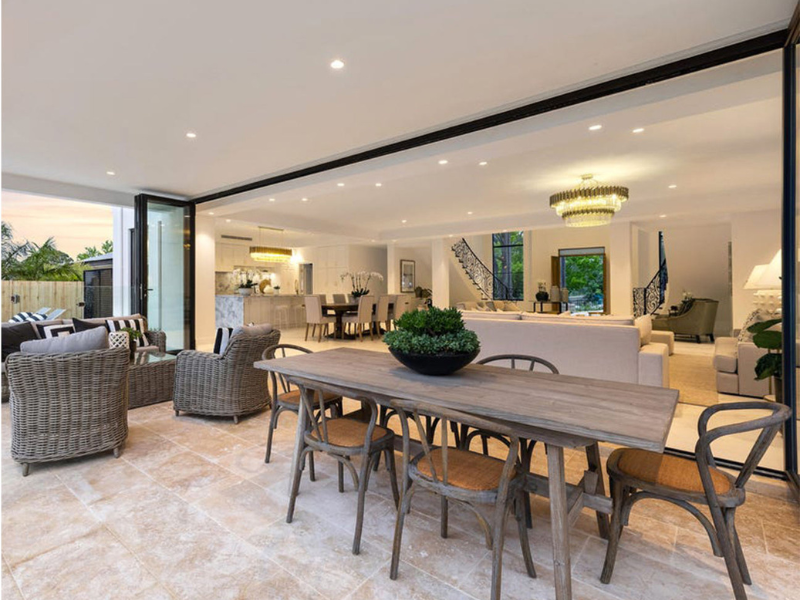
1. Check the Aluminum Profile Material
Aluminum Alloy: 6061, 60636063 is commonly used for architectural aluminum profiles because it offers good extrudability and surface quality, while 6061 provides higher strength for applications requiring greater structural performance.
Profile Wall Thickness
Do not evaluate a folding door only by appearance. Profile wall thickness should be selected according to door size, panel weight, opening configuration, wind load, and application requirements.
Profile Structure
Frame structure
Reinforcement
Glass groove
Hardware mounting area
For projects requiring custom dimensions or profile structures, working directly with an aluminum extrusion manufacturer can provide greater flexibility.
Aluminum Folding Door & Custom Folding Door Profiles
2. Choose the Right Folding Door System
Top-Hung Folding SystemLarge openings
Smooth operation
Residential applications
Bottom-Rolling System
Larger/heavier panels
Projects requiring higher load capacity
Multi-Panel Folding System
Wide openings
Commercial projects
Large glass areas
The right folding system should be selected according to panel size, total door weight, opening width, frequency of use, and installation conditions.
3. Check the Hardware and Load Capacity
RollersLoad capacity
Material
Smooth operation
Wear resistance
Hinges
Bearing quality
Load capacity
Alignment
Opening and closing cycles
Handles and Locks
Material
Corrosion resistance
Compatibility
Security
Hardware should be matched with the aluminum profile and panel weight rather than selected independently.
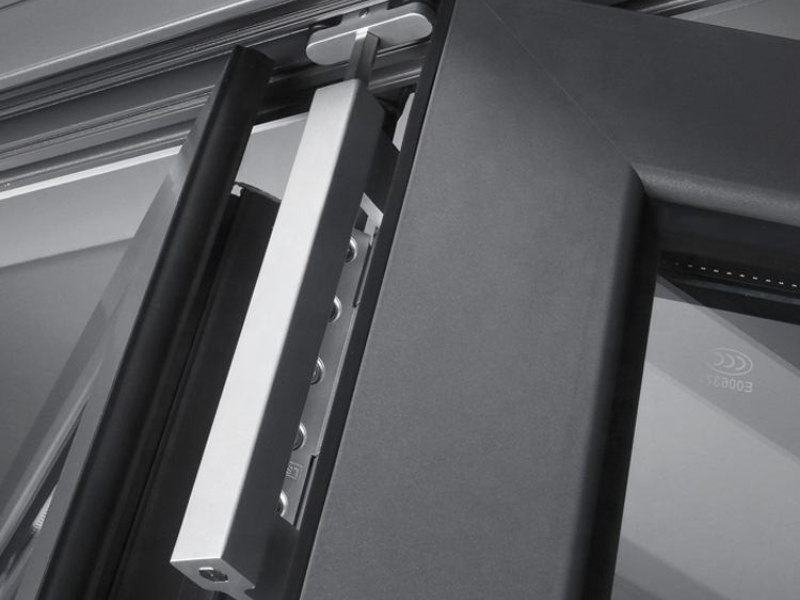
4. Consider the Glass Configuration
Glass ThicknessSingle or Double Glazing
Thermal insulation
Sound insulation
Energy efficiency
Safety Glass
Residential and commercial folding doors commonly use tempered or other safety glass configurations depending on local requirements.
The glass weight should also be considered when selecting rollers, hinges, and aluminum profiles.
5. Select the Right Surface Treatment
Powder CoatingWide color selection
Residential
Commercial projects
Anodizing
Modern appearance
Metallic finish
Good surface durability
Wood Grain Finish
Residential
Villa
Projects requiring a wood appearance
Surface treatment should be selected according to the project location, required appearance, corrosion resistance, and maintenance expectations.
6. Check Sealing and Weather Resistance
For exterior folding doors, sealing performance is just as important as the aluminum frame itself.Weather strips
Gaskets
Panel joints
Drainage
Frame connections
Glass sealing
For balconies, patios, villas, and other exterior applications, the door system should be evaluated for water resistance, wind resistance, and long-term exposure to weather conditions.
7. Consider Customization Requirements
Door opening sizeNumber of panels
Panel width
Profile dimensions
Glass configuration
Color
Hardware
Opening direction
Surface treatment
Shenghai Aluminum supports customized aluminum folding door solutions, including profile extrusion, surface treatment, CNC machining, fabrication, and finished door processing.
8. Choose a Manufacturer That Can Handle the Whole Process
Can they make custom profiles?Can they develop extrusion dies?
Can they handle surface treatment?
Can they perform CNC machining?
Can they fabricate finished doors?
Can they provide samples before mass production?
Can they control dimensions and surface quality?
Shenghai Aluminum provides a one-stop manufacturing process from aluminum extrusion and profile development to surface treatment, CNC machining, fabrication, quality inspection, and delivery.
Frequently Asked Questions
What aluminum alloy is best for folding doors?
6063 aluminum is commonly used for folding doors, while 6061 is suitable for applications requiring higher strength. The choice depends on door size, panel weight, wind load, and project requirements.
How thick should an aluminum folding door frame be?
Profile thickness depends on door size, panel width, glass weight, wind load, and hardware. The frame should be selected based on the actual structural requirements.
Are aluminum folding doors suitable for exterior use?
Yes. Aluminum folding doors are suitable for patios, balconies, villas, and commercial buildings. Proper sealing, drainage, corrosion-resistant finishes, and weather-resistant hardware are important for exterior applications.
What glass is suitable for aluminum folding doors?
Tempered safety glass is commonly used. Single or double glazing can be selected based on safety, thermal insulation, and sound insulation requirements. Glass weight should also match the profile and hardware capacity.
Can aluminum folding doors be customized?
Yes. Aluminum folding doors can be customized in size, panel number, profile design, glass, color, surface treatment, hardware, and opening direction. Custom profiles and finished doors can also be developed for specific projects.
Aluminum Folding Door Buying Checklist
|
Item |
What to Check |
|
Aluminum Profile |
Alloy, wall thickness, profile structure |
|
Folding System |
Top-hung, bottom-rolling, multi-panel |
|
Hardware |
Rollers, hinges, handles, locks |
|
Glass |
Thickness, type, glazing configuration |
|
Surface Treatment |
Powder coating, anodizing, wood grain |
|
Sealing |
Gaskets, weather strips, drainage |
|
Customization |
Size, panels, color, profile |
|
Manufacturer |
Extrusion, machining, fabrication, QC |
Looking for Custom Aluminum Folding Door Profiles?
If you are sourcing aluminum folding doors or developing a custom door system, Shenghai Aluminum can support your project from profile extrusion to surface treatment, CNC machining, fabrication, and finished door production.
Send us your drawings, dimensions, or project requirements to discuss a suitable aluminum folding door solution.