Aluminum Curtain Wall
Aluminum curtain wall is an exterior covering of a building in which the outer walls are non-structural, instead serving to protect the interior of the building from the elements. Because the curtain wall façade carries no structural load beyond its own dead load weight, it can be made of lightweight materials. The wall transfers lateral wind loads upon it to the main building structure through connections at floors or columns of the building.
Curtain walls may be designed as "systems" integrating frame, wall panel, and weatherproofing materials. Steel frames have largely given way to aluminum extrusions. Glass is typically used for infill because it can reduce construction costs, provide an architecturally pleasing look, and allow natural light to penetrate deeper within the building. However, glass also makes the effects of light on visual comfort and solar heat gain in a building more difficult to control. Other common infills include stone veneer, metal panels, louvres, and operable windows or vents.
Unlike storefront systems, curtain wall systems are designed to span multiple floors, taking into consideration building sway and movement and design requirements such as thermal expansion and contraction; seismic requirements; water diversion; and thermal efficiency for cost-effective heating, cooling, and interior lighting.
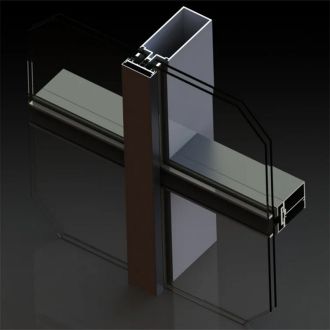
Curtain Wall
Architecture Curtain Wall Aluminum Profile for UAE
Glazed Curtain Wall
Glazed Aluminum Curtain Wall Profile
2R./P1
1
Leave a Message
In the field of modern architecture, demands for aesthetics, durability, and energy efficiency are constantly rising. Aluminum curtain walls not only give buildings an elegant appearance but also provide long-lasting protection to the building structure, making them very popular in construction projects. From high-end office buildings to luxury residences, aluminum curtain walls have become an important part of modern architecture. The rich color and finish options enable them to complement a wide range of design styles, making the building both beautiful and strong.
Aesthetics
Aluminum curtain walls can offer rich colors and textures through sophisticated surface treatments such as anodizing and powder coating. They can also be arranged in various configurations to create architectural appearances ranging from clean and monumental to highly technological or artistic.
When paired with large areas of glass, they create a transparent visual effect and abundant natural light, resulting in bright and open spaces. By combining different curtain wall panels such as glass, aluminum plates and stone, and ingeniously applying sunshade components, allowing for the creation of rich light, shadow and effects on the facade.
Structural Safety
Aluminum alloy has high strength and good toughness, and can resist the impact of external forces such as strong winds and earthquakes. It can effectively transfer the high wind pressure and seismic forces to the building's main structure. This helps maintain structural stability and avoid potential safety hazards such as detachment and collapse. Furthermore, its lightweight nature minimizes the additional dead load on the main structure, thereby enhancing structural safety.
Durability and Corrosion Resistance
Aluminum alloys themselves have excellent corrosion resistance. After professional surface treatment, they can effectively resist the erosion of UV rays, acid rain and pollution, and are not prone to rust or fading. Compared with traditional wall materials, aluminum curtain walls have a longer service life and retain their color and performance for decades. In the later stage, only simple cleaning and maintenance are needed to keep the building in good condition, significantly reducing its long-term maintenance costs.
Thermal Insulation
Aluminum curtain walls offer excellent thermal insulation and heat retention. Especially when combined with materials such as insulating glass and insulation cotton, these systems can effectively reduce heat transfer between the indoor and outdoor environments. In summer, reduce external heat gain and lower the cooling load of air conditioners. Reduce winter indoor heat loss and save on heating costs. Significantly enhance the energy-saving effect of buildings, which is central to modern green building design principles.
1. Curtain wall with visible frame
This is the most classic and widely used style. The exposed frame design uses aluminum profiles as the primary structural support, with glass panels set within the frame and the frame itself exposed to the outside. It has strong structural stability and excellent wind and earthquake resistance. Easy to install, the glass and frame can be flexibly adjusted on site, and there is no need for large-scale disassembly for later maintenance or glass replacement.
It is usually used in buildings such as office buildings and residences that are continuously installed on multiple floors, enhancing the vertical extension sense of the building through unified frame lines.
2. Curtain wall with hidden frame
The hidden frame design completely conceals the aluminum frame behind the glass panel, presenting a complete glass surface on the outside. It is visually simple and transparent, allowing as much natural light as possible to enter. Making the building's appearance more upscale and textured is the top choice for modern minimalist style buildings.
It is applicable to high-end commercial complexes, art galleries, science and technology museums, and other similar facilities.
3. Curtain wall with horizontal visible frame and vertical hidden frame
It perfectly combines the design advantages of both visible and hidden frames, featuring the stability of visible frames and the transparency of hidden frames. The horizontal part uses an exposed aluminum alloy frame, while the vertical part is concealed within the glass seams. This style can ensure the stability of the horizontal structure while weakening the vertical visual lines, making the building facade simpler and smoother. It is an ideal choice for mid-rise buildings such as office buildings, hotels and CBDS.
4. Vertical visible frame and horizontal hidden frame curtain wall
In contrast to the horizontal exposure and vertical concealment, the vertical frame is made of exposed aluminum alloy, while the horizontal frame is hidden behind the glass. Longitudinal aluminum alloy frames can enhance the seismic performance of buildings, especially for high-rise buildings. The hidden horizontal design reduces visual obstruction, making the building facade appear lighter.
Suitable scenarios: High-rise residential buildings, apartments, and buildings that require "vertical line enhancement".
5. Unitized curtain wall
It focuses on the efficient construction mode of "factory integrated integration + on-site rapid hoisting". Aluminum alloy frames, glass, seals and other components are assembled into complete curtain wall units in the factory. On-site, only hoisting and splicing are required, which is particularly suitable for large-scale projects with tight schedules. An elastic sealing design is used between the unit plates to enhance overall durability. It has good sealing performance and excellent waterproofing and thermal insulation.
6. Curtain wall with thermal break
Heat-break strips are added to the aluminum alloy frame to form a "thermal break" structure that blocks heat transfer. Significantly enhance the thermal insulation performance of buildings and reduce the energy consumption of air conditioning and heating. It is the core type of curtain wall for "energy-saving buildings". The aluminum alloy frame maintains its original strength while also prioritizing energy conservation and structural stability.
A. Professional and Efficient Manufacturing Capabilities
Surface Treatment: Shenghai Aluminum is equipped with a complete set of surface treatment production lines, including anodizing and powder coating, and can customize various colors and textures according to project requirements. The treated profiles are corrosion- and UV-resistant, with a uniform, stable color. They are not prone to fading or peeling over long-term use, ensuring the curtain wall's lasting beauty.
Precision Machining: Equipped with high-precision CNC equipment, it can perform cutting, milling grooves, and drilling on profiles. Ensure the perfect fit of profiles, connectors, and panels to enhance the overall stability of the curtain wall.
Accurate Drilling and Cutting: To meet the assembly requirements of curtain wall profiles, our drilling process is precisely positioned, and the cutting process ensures consistent lengths. The cross-section is smooth and free of burrs, providing a foundation for subsequent corner assembly and splicing. That is, after the profiles arrive at the construction site, they can be assembled or installed directly into panels, thereby reducing the uncertainty and time costs of on-site construction.
B. Factory Strength
Reliable supply capacity stems from a solid factory foundation.
Abundant Production Capacity: We have multiple modern aluminum profile extrusion production lines capable of handling large-scale, multi-batch orders in parallel. By integrating the advanced ERP production management system, we can achieve full-process visual control from molds, extrusion, surface treatment, to deep processing. Whether it is a large or small order, we can rationally plan the production schedule to ensure stable delivery dates.
Professional Design Capabilities: We have an experienced aluminum curtain wall design team that can deeply understand architectural design drawings and the functional requirements of curtain walls. Not only can it accurately reproduce the design plan, but it can also, based on rich production and installation experience, provide suggestions for optimizing the structure of aluminum profiles, such as optimizing wall thickness design, enhancing profile strength, and reducing material costs.
Comprehensive Solution Capabilities: We are not merely a simple profile supplier; we also offer full-process solutions for projects. Whether it is to cooperate with the mainstream international curtain wall systems or to provide unique customized designs for customers; We offer a complete set of solutions, ranging from profile selection and confirmation of technical parameters, quality control during the production process, processing techniques, to installation technical guidance and after-sales maintenance in the later stage. Our professional team will follow up throughout the process to help you avoid project risks.
C. Extensive Practical Case Experience
Over the years, Shenghai Aluminum, with its rich experience in customized solutions, has successfully implemented aluminum curtain wall projects for customers in many countries such as the United States, Canada, the United Arab Emirates, and Vietnam, precisely matching the building standards and demands of different national markets: providing glass-filled aluminum alloy frame curtain wall profiles according to the building codes of the United States and Canada markets. For projects that pursue architectural aesthetics and sealing performance, custom-made hidden-frame exterior glass aluminum curtain wall profiles are provided. For different climates and usage scenarios, it is suitable for multi-element filling solutions such as double-layer insulating glass.
Choosing a reliable supplier is the core prerequisite for ensuring the quality of aluminum curtain walls. By choosing Shenghai Aluminum, you can not only obtain high-quality products but also enjoy professional technical support, a stable supply chain, and one-stop service. You can save costs and enhance competitiveness through large-scale production and process optimization. Committed to becoming your long-term partner in aluminum curtain wall projects and providing you with full protection throughout the process. If your project is looking for an aluminum curtain wall profile supplier, feel free to contact us and have an in-depth conversation about your requirements. We will provide you with a dedicated solution.
What is an Aluminum Curtain Wall
Aluminum curtain wall, simply put, is a non-load-bearing exterior wall made of aluminum alloy that is suspended outside the main structure of a building. This exterior envelope structure is mainly composed of aluminum profiles as the framework, combined with glass and aluminum panels, and is fixed to the building's main structure via special connecting parts. The components of aluminum curtain walls are mostly prefabricated in factories and assembled on site, resulting in higher construction efficiency and simplified future maintenance. These characteristics make them the preferred solution for the development of modern building industrialization.What are the Functions of Aluminum Curtain Walls
When people think of aluminum curtain walls, "aesthetics" often comes to mind first, but it's not as simple as just appearance. In fact, they enhance the building's occupant comfort and operational performance in multiple dimensions, shielding the interior from the external environment and combining both decorative and functional features. So, what are the functions of aluminum curtain walls? To be an important part of a building, they must have special advantages and functions.Aesthetics
Aluminum curtain walls can offer rich colors and textures through sophisticated surface treatments such as anodizing and powder coating. They can also be arranged in various configurations to create architectural appearances ranging from clean and monumental to highly technological or artistic.
When paired with large areas of glass, they create a transparent visual effect and abundant natural light, resulting in bright and open spaces. By combining different curtain wall panels such as glass, aluminum plates and stone, and ingeniously applying sunshade components, allowing for the creation of rich light, shadow and effects on the facade.
Structural Safety
Aluminum alloy has high strength and good toughness, and can resist the impact of external forces such as strong winds and earthquakes. It can effectively transfer the high wind pressure and seismic forces to the building's main structure. This helps maintain structural stability and avoid potential safety hazards such as detachment and collapse. Furthermore, its lightweight nature minimizes the additional dead load on the main structure, thereby enhancing structural safety.
Durability and Corrosion Resistance
Aluminum alloys themselves have excellent corrosion resistance. After professional surface treatment, they can effectively resist the erosion of UV rays, acid rain and pollution, and are not prone to rust or fading. Compared with traditional wall materials, aluminum curtain walls have a longer service life and retain their color and performance for decades. In the later stage, only simple cleaning and maintenance are needed to keep the building in good condition, significantly reducing its long-term maintenance costs.
Thermal Insulation
Aluminum curtain walls offer excellent thermal insulation and heat retention. Especially when combined with materials such as insulating glass and insulation cotton, these systems can effectively reduce heat transfer between the indoor and outdoor environments. In summer, reduce external heat gain and lower the cooling load of air conditioners. Reduce winter indoor heat loss and save on heating costs. Significantly enhance the energy-saving effect of buildings, which is central to modern green building design principles.
What Types of Aluminum Curtain Walls Are There
There are many types of aluminum curtain walls that can be customized for different applications. To help everyone clearly understand the types of aluminum curtain walls, we combined the projects we have done with industry statistics and identified approximately 6 types.1. Curtain wall with visible frame
This is the most classic and widely used style. The exposed frame design uses aluminum profiles as the primary structural support, with glass panels set within the frame and the frame itself exposed to the outside. It has strong structural stability and excellent wind and earthquake resistance. Easy to install, the glass and frame can be flexibly adjusted on site, and there is no need for large-scale disassembly for later maintenance or glass replacement.
It is usually used in buildings such as office buildings and residences that are continuously installed on multiple floors, enhancing the vertical extension sense of the building through unified frame lines.
2. Curtain wall with hidden frame
The hidden frame design completely conceals the aluminum frame behind the glass panel, presenting a complete glass surface on the outside. It is visually simple and transparent, allowing as much natural light as possible to enter. Making the building's appearance more upscale and textured is the top choice for modern minimalist style buildings.
It is applicable to high-end commercial complexes, art galleries, science and technology museums, and other similar facilities.
3. Curtain wall with horizontal visible frame and vertical hidden frame
It perfectly combines the design advantages of both visible and hidden frames, featuring the stability of visible frames and the transparency of hidden frames. The horizontal part uses an exposed aluminum alloy frame, while the vertical part is concealed within the glass seams. This style can ensure the stability of the horizontal structure while weakening the vertical visual lines, making the building facade simpler and smoother. It is an ideal choice for mid-rise buildings such as office buildings, hotels and CBDS.
4. Vertical visible frame and horizontal hidden frame curtain wall
In contrast to the horizontal exposure and vertical concealment, the vertical frame is made of exposed aluminum alloy, while the horizontal frame is hidden behind the glass. Longitudinal aluminum alloy frames can enhance the seismic performance of buildings, especially for high-rise buildings. The hidden horizontal design reduces visual obstruction, making the building facade appear lighter.
Suitable scenarios: High-rise residential buildings, apartments, and buildings that require "vertical line enhancement".
5. Unitized curtain wall
It focuses on the efficient construction mode of "factory integrated integration + on-site rapid hoisting". Aluminum alloy frames, glass, seals and other components are assembled into complete curtain wall units in the factory. On-site, only hoisting and splicing are required, which is particularly suitable for large-scale projects with tight schedules. An elastic sealing design is used between the unit plates to enhance overall durability. It has good sealing performance and excellent waterproofing and thermal insulation.
6. Curtain wall with thermal break
Heat-break strips are added to the aluminum alloy frame to form a "thermal break" structure that blocks heat transfer. Significantly enhance the thermal insulation performance of buildings and reduce the energy consumption of air conditioning and heating. It is the core type of curtain wall for "energy-saving buildings". The aluminum alloy frame maintains its original strength while also prioritizing energy conservation and structural stability.
Advantages of Choosing Us as Your Aluminum Curtain Wall Profile Supplier
Shenghai Aluminum has been deeply engaged in aluminum curtain wall profiles for many years and possesses full-process capabilities, enabling it to precisely meet the technical requirements of various curtain wall types. Choosing us as your supplier of aluminium curtain wall profiles would be a great option. Because our production capacity and factory strength enable us to deliver high-quality aluminium curtain wall profiles.A. Professional and Efficient Manufacturing Capabilities
Surface Treatment: Shenghai Aluminum is equipped with a complete set of surface treatment production lines, including anodizing and powder coating, and can customize various colors and textures according to project requirements. The treated profiles are corrosion- and UV-resistant, with a uniform, stable color. They are not prone to fading or peeling over long-term use, ensuring the curtain wall's lasting beauty.
Precision Machining: Equipped with high-precision CNC equipment, it can perform cutting, milling grooves, and drilling on profiles. Ensure the perfect fit of profiles, connectors, and panels to enhance the overall stability of the curtain wall.
Accurate Drilling and Cutting: To meet the assembly requirements of curtain wall profiles, our drilling process is precisely positioned, and the cutting process ensures consistent lengths. The cross-section is smooth and free of burrs, providing a foundation for subsequent corner assembly and splicing. That is, after the profiles arrive at the construction site, they can be assembled or installed directly into panels, thereby reducing the uncertainty and time costs of on-site construction.
B. Factory Strength
Reliable supply capacity stems from a solid factory foundation.
Abundant Production Capacity: We have multiple modern aluminum profile extrusion production lines capable of handling large-scale, multi-batch orders in parallel. By integrating the advanced ERP production management system, we can achieve full-process visual control from molds, extrusion, surface treatment, to deep processing. Whether it is a large or small order, we can rationally plan the production schedule to ensure stable delivery dates.
Professional Design Capabilities: We have an experienced aluminum curtain wall design team that can deeply understand architectural design drawings and the functional requirements of curtain walls. Not only can it accurately reproduce the design plan, but it can also, based on rich production and installation experience, provide suggestions for optimizing the structure of aluminum profiles, such as optimizing wall thickness design, enhancing profile strength, and reducing material costs.
Comprehensive Solution Capabilities: We are not merely a simple profile supplier; we also offer full-process solutions for projects. Whether it is to cooperate with the mainstream international curtain wall systems or to provide unique customized designs for customers; We offer a complete set of solutions, ranging from profile selection and confirmation of technical parameters, quality control during the production process, processing techniques, to installation technical guidance and after-sales maintenance in the later stage. Our professional team will follow up throughout the process to help you avoid project risks.
C. Extensive Practical Case Experience
Over the years, Shenghai Aluminum, with its rich experience in customized solutions, has successfully implemented aluminum curtain wall projects for customers in many countries such as the United States, Canada, the United Arab Emirates, and Vietnam, precisely matching the building standards and demands of different national markets: providing glass-filled aluminum alloy frame curtain wall profiles according to the building codes of the United States and Canada markets. For projects that pursue architectural aesthetics and sealing performance, custom-made hidden-frame exterior glass aluminum curtain wall profiles are provided. For different climates and usage scenarios, it is suitable for multi-element filling solutions such as double-layer insulating glass.
Choosing a reliable supplier is the core prerequisite for ensuring the quality of aluminum curtain walls. By choosing Shenghai Aluminum, you can not only obtain high-quality products but also enjoy professional technical support, a stable supply chain, and one-stop service. You can save costs and enhance competitiveness through large-scale production and process optimization. Committed to becoming your long-term partner in aluminum curtain wall projects and providing you with full protection throughout the process. If your project is looking for an aluminum curtain wall profile supplier, feel free to contact us and have an in-depth conversation about your requirements. We will provide you with a dedicated solution.