Aluminum VS PVC Windows: Which is Better
Updated: 2 Feb 2026
In selecting doors and windows for building projects, aluminum and PVC windows are frequently chosen by purchasers and project owners. This is not just a comparison of material unit prices, but more importantly, a balance of durability, aesthetics, energy efficiency, maintenance, and overall functionality to determine whether they meet the project's long-term usage needs. Both are excellent materials, each with its own advantages and disadvantages; there is no absolute "better," only what is more suitable. Which one is more suitable for your project? Let's start by understanding their characteristics.
Aluminum is a recyclable metal. It possesses extremely high structural strength and allows for flexible design. Combined with a thermal break structure, it offers excellent thermal insulation performance. Furthermore, it boasts outstanding weather resistance and durability, resulting in low maintenance costs and minimal need for frequent repairs or replacements, ensuring worry-free long-term use.
PVC is essentially a plastic. Commonly used in doors and windows, it offers good basic thermal insulation and has a relatively low procurement cost. It is lightweight, easy to process, and easy to install. However, it has poor heat resistance and is prone to aging and discoloration when exposed to high temperatures for prolonged periods. It also has weak impact resistance and is prone to cracking in low-temperature environments.
Strength and Safety
Aluminum Windows: Aluminum profiles are highly strong and structurally stable, making them suitable for large floor-to-ceiling windows. They withstand wind pressure up to level 9, making them perfectly suited for high-rise buildings and windy coastal areas. Thickened profiles and multi-layered reinforcing structures offer significantly superior impact and pry resistance compared to PVC materials. When closed, they fit snugly against the wall, providing reliable safety protection for the building.
PVC Windows: Due to the plastic material's low structural strength, they lack impact and deformation resistance. Long-term use can easily lead to frame loosening and sagging. If subjected to external impact, the window frame is prone to dents and damage, making it only suitable for basic protection in low-rise buildings.
Lifespan and Durability
Aluminum Windows: The aluminum frame has a lifespan of over 20 years, maintaining stable performance over a long period. After surface treatments such as anodizing and powder coating, its resistance to ultraviolet rays and corrosion is significantly improved. Even under prolonged exposure to sunlight and high-salt-spray environments, it will not fade, deform, or rust. Frequent replacements are unnecessary, significantly reducing the project's later maintenance and replacement costs.
PVC Windows: The normal service life is 10-15 years. Although they have basic durability, the material is prone to aging over time. Prolonged exposure to sun, wind, and rain will accelerate aging, make them brittle, and cause discoloration, requiring frequent repairs and later replacement of window frames, increasing investment costs.
Fireproof and Moisture-proof
Aluminum Windows: Made of non-combustible metal, meeting fire safety standards for various buildings. They are also highly resistant to moisture and salt spray corrosion, moisture-proof, non-absorbent, and mold-resistant, making them suitable for humid environments such as coastal areas and rainy regions.
PVC Windows: Made of flammable material, they cannot meet the requirements of high-rise buildings or projects with strict fire safety requirements. They soften and melt easily at high temperatures, releasing harmful gases, and exhibit poor fire safety performance. In long-term, humid environments, the window frame is prone to swelling from moisture, and the sealing strips will age and fail more quickly, affecting airtightness.
Design Flexibility
Aluminum Windows: Highly malleable, they can be processed into various cross-sectional shapes and sizes, supporting large spans and custom-designed irregular window shapes to fully meet the personalized needs of projects. A variety of surface treatment processes are available, including anodizing, powder coating, electrophoresis, and other techniques, to meet the aesthetic requirements of different architectural styles.
PVC Windows: Limited by the material, they can only be processed into small-sized, standard rectangular window shapes, unable to produce large-sized, large-span, or personalized irregular designs. The appearance styles are relatively limited, and the surface color choices are limited, making it difficult to meet project customization needs.
Thermal Insulation and Energy Saving
Aluminum Windows: When combined with a thermal break structure, they effectively block heat transfer, significantly improving thermal insulation and reducing energy consumption for air conditioning and heating, while also enhancing indoor comfort in homes and offices.
PVC Windows: The plastic itself has low thermal conductivity, providing good basic thermal insulation. However, prolonged exposure to high temperatures and sunlight accelerates material aging, causing insulation performance to decline year by year and leading to a gradual increase in energy consumption.
Low maintenance and Recyclable
Aluminum Windows: Daily cleaning only requires water, resulting in extremely low maintenance costs. Furthermore, aluminum is 100% recyclable and environmentally friendly, aligning with the trend toward low-carbon, environmentally friendly development.
PVC Windows: Initial maintenance is relatively simple, but aging can lead to discoloration, cracking, and deformation. Regular inspection and replacement of worn sealing strips, as well as repair of deformed areas, are necessary. PVC is difficult to recycle, and the recycling process can generate pollution, potentially making it unsuitable for some high-end projects with environmental and aesthetic requirements.
Sound Insulation
Aluminum Windows: Utilizing a multi-cavity structure and high-quality sealing strips, they offer excellent sealing performance and effectively block external noise. The sound insulation effect is particularly significant for buildings facing streets or residences near industrial areas, creating a quiet indoor environment.
PVC Windows: While the material itself offers some sound insulation, its simple structure and single-cavity design result in weaker sound insulation than aluminum windows of the same specifications. In noisy environments, it is difficult to effectively block external interference.
Neither type of window is inherently superior or inferior. Different performance characteristics correspond to different usage scenarios; the key is whether it meets the project's requirements.
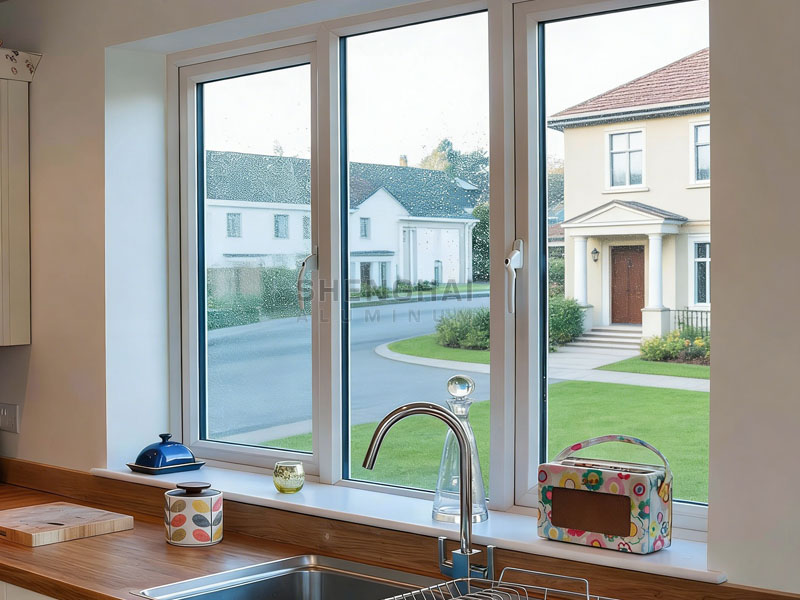
PVC Window Applications
Budget-sensitive ground-floor standardized housing and temporary transitional buildings;
Areas with mild climates and no extreme heat, direct sunlight, or strong winds;
Basic engineering projects with lower requirements for window and door appearance design, sound insulation, and fire resistance.
Aluminum Window Applications
Extreme climate zones: areas with high heat and humidity, strong ultraviolet radiation, coastal areas with high salt spray, or high wind pressure;
Buildings with higher requirements for profile strength and safety: high-rise buildings, commercial complexes, industrial plants, schools, hospitals, and other public buildings;
Pursuing personalized architectural aesthetics: high-end residential and commercial projects requiring large windows, narrow frames, large spans, irregularly shaped windows, or customized colors;
Emphasizing long-term building sustainability and requiring environmentally friendly, recyclable green building projects.
PVC windows offer the lowest initial investment, making them a practical choice for projects with extremely tight budgets or short-term building lifespan expectations.
Aluminum windows, while requiring a higher initial investment, offer decades of assurance in safety, durability, aesthetics, and energy efficiency, with virtually no additional costs later on, eliminating concerns about maintenance or replacement.
Therefore, for the vast majority of modern building projects that prioritize durability, quality, safety, reliability, and long-term economic benefits, aluminum profile windows are undoubtedly the more forward-thinking choice.
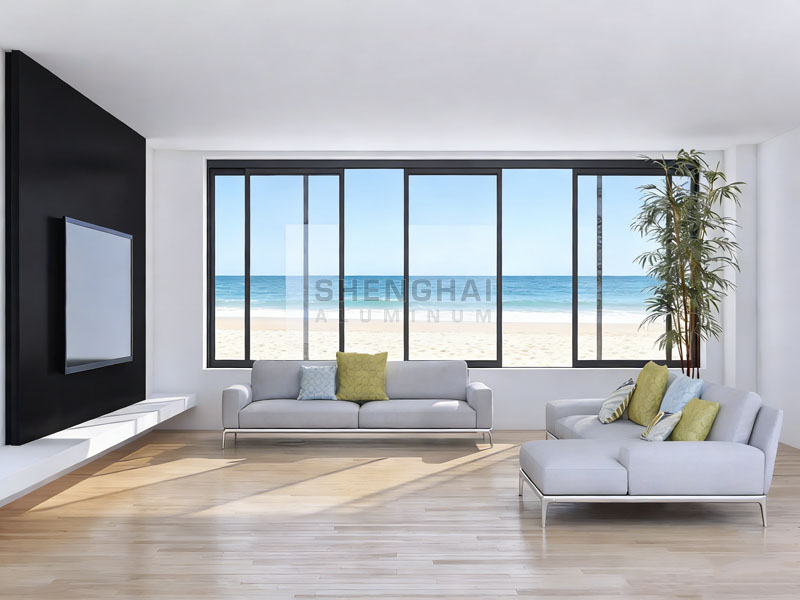
No. The surface coating on high-quality aluminum windows undergoes rigorous adhesion and weather-resistance testing. These processes ensure a strong bond between the coating and the aluminum, providing excellent UV, corrosion, and scratch resistance. With normal use, it can remain powdery and peel-free for decades.
2. Which is more cost-effective: aluminum windows or PVC windows?
If you prioritize initial purchase and installation costs and a short project cycle (5-8 years), PVC windows offer lower initial costs, making them a cost-effective choice for basic scenarios.
However, if you value long-term overall value, considering the entire lifespan (20 years or more), aluminum windows offer significantly better value than PVC windows. Aluminum windows have a long lifespan, extremely low maintenance costs, require less frequent replacement of parts or frames, and offer excellent energy efficiency and recycling value, resulting in lower overall costs over the long term.
3. Are PVC windows more energy-efficient than aluminum windows?
Not necessarily. While PVC windows may initially be more energy-efficient, their performance deteriorates over time compared to aluminum windows. PVC materials gradually age with prolonged exposure to sunlight and temperature fluctuations, resulting in a gradual decrease in their insulation properties.
4. Do PVC windows have a longer lifespan?
No. PVC windows have a lifespan of 10-15 years. Prolonged exposure to ultraviolet radiation, high temperatures, and humidity will accelerate aging, discoloration, and embrittlement, leading to performance degradation and a shortened actual lifespan.
Aluminum windows have a lifespan of over 20 years. They are also highly weather-resistant, less prone to aging, and can maintain stable performance even in extreme environments.
5. In cold regions where heating energy consumption is high in winter, which type of window has better insulation performance?
Aluminum windows, because their insulation performance does not decline over time. Thanks to their stable structural strength, they can withstand snow loads well and ensure the window's airtightness in severe cold, preventing cold air from seeping in due to frame deformation. The sealing system of aluminum windows maintains high airtightness for a long time.
While PVC windows have basic thermal insulation performance, they become brittle in long-term low-temperature environments, and their sealing system ages as the material ages, resulting in inferior long-term insulation performance compared to aluminum windows.
In the modern construction industry, aluminum doors and windows have become an inevitable trend. Shenghai Aluminum boasts over 15 years of experience in architectural aluminum profiles, continuously driving aluminum profiles to become a leading material in door and window systems through ongoing technological innovation and innovative design concepts.
We use high-quality 6061 and 6063 aluminum alloys, employing extrusion processes to create thickened profiles and incorporating multi-layered reinforcing ribs and other designs, to effectively resist external damage, providing strong protection for building security.
In terms of thermal insulation and energy efficiency, Shenghai Aluminum embeds high-temperature-resistant, anti-aging PA66 nylon thermal break strips into its thermally broken aluminum profiles, blocking heat conduction at the source. Combined with a multi-cavity profile design, this significantly improves the sealing performance of doors and windows, effectively reducing energy consumption for air conditioning and heating.
We offer various surface treatment processes, such as anodizing and powder coating for protection, not only for aesthetics but also to resist the corrosive effects of extreme natural environments such as coastal salt spray and desert ultraviolet radiation, maintaining appearance and performance for a long time.
From technological innovation to design implementation, from performance optimization to scenario adaptation, we are always market-oriented, leveraging our professional capabilities in architectural aluminum profile manufacturing to deliver high-quality, customized aluminum profile solutions for global construction projects.
Aluminum is a recyclable metal. It possesses extremely high structural strength and allows for flexible design. Combined with a thermal break structure, it offers excellent thermal insulation performance. Furthermore, it boasts outstanding weather resistance and durability, resulting in low maintenance costs and minimal need for frequent repairs or replacements, ensuring worry-free long-term use.
PVC is essentially a plastic. Commonly used in doors and windows, it offers good basic thermal insulation and has a relatively low procurement cost. It is lightweight, easy to process, and easy to install. However, it has poor heat resistance and is prone to aging and discoloration when exposed to high temperatures for prolonged periods. It also has weak impact resistance and is prone to cracking in low-temperature environments.
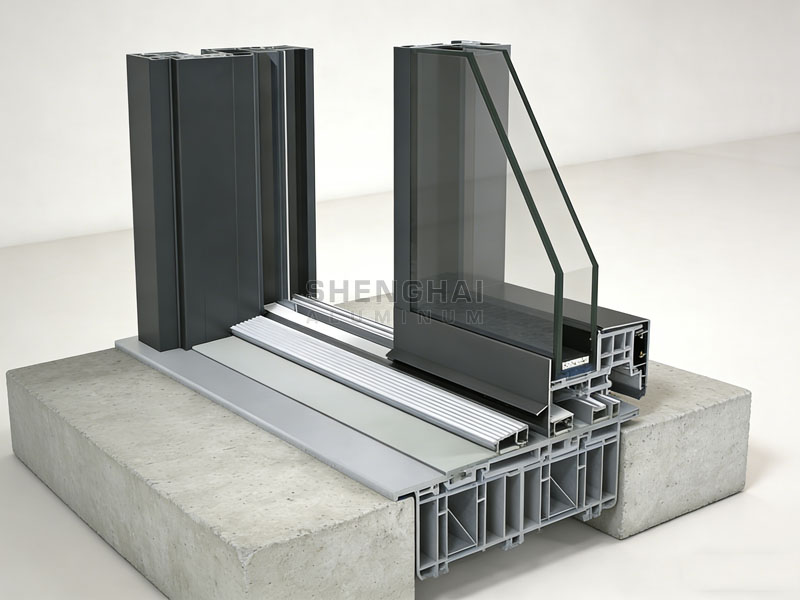
Aluminum Windows VS PVC Windows
To help everyone better understand the differences between aluminum and PVC windows, Shenghai Aluminum has provided a detailed comparison of the two materials' characteristics.Strength and Safety
Aluminum Windows: Aluminum profiles are highly strong and structurally stable, making them suitable for large floor-to-ceiling windows. They withstand wind pressure up to level 9, making them perfectly suited for high-rise buildings and windy coastal areas. Thickened profiles and multi-layered reinforcing structures offer significantly superior impact and pry resistance compared to PVC materials. When closed, they fit snugly against the wall, providing reliable safety protection for the building.
PVC Windows: Due to the plastic material's low structural strength, they lack impact and deformation resistance. Long-term use can easily lead to frame loosening and sagging. If subjected to external impact, the window frame is prone to dents and damage, making it only suitable for basic protection in low-rise buildings.
Lifespan and Durability
Aluminum Windows: The aluminum frame has a lifespan of over 20 years, maintaining stable performance over a long period. After surface treatments such as anodizing and powder coating, its resistance to ultraviolet rays and corrosion is significantly improved. Even under prolonged exposure to sunlight and high-salt-spray environments, it will not fade, deform, or rust. Frequent replacements are unnecessary, significantly reducing the project's later maintenance and replacement costs.
PVC Windows: The normal service life is 10-15 years. Although they have basic durability, the material is prone to aging over time. Prolonged exposure to sun, wind, and rain will accelerate aging, make them brittle, and cause discoloration, requiring frequent repairs and later replacement of window frames, increasing investment costs.
Fireproof and Moisture-proof
Aluminum Windows: Made of non-combustible metal, meeting fire safety standards for various buildings. They are also highly resistant to moisture and salt spray corrosion, moisture-proof, non-absorbent, and mold-resistant, making them suitable for humid environments such as coastal areas and rainy regions.
PVC Windows: Made of flammable material, they cannot meet the requirements of high-rise buildings or projects with strict fire safety requirements. They soften and melt easily at high temperatures, releasing harmful gases, and exhibit poor fire safety performance. In long-term, humid environments, the window frame is prone to swelling from moisture, and the sealing strips will age and fail more quickly, affecting airtightness.
Design Flexibility
Aluminum Windows: Highly malleable, they can be processed into various cross-sectional shapes and sizes, supporting large spans and custom-designed irregular window shapes to fully meet the personalized needs of projects. A variety of surface treatment processes are available, including anodizing, powder coating, electrophoresis, and other techniques, to meet the aesthetic requirements of different architectural styles.
PVC Windows: Limited by the material, they can only be processed into small-sized, standard rectangular window shapes, unable to produce large-sized, large-span, or personalized irregular designs. The appearance styles are relatively limited, and the surface color choices are limited, making it difficult to meet project customization needs.
Thermal Insulation and Energy Saving
Aluminum Windows: When combined with a thermal break structure, they effectively block heat transfer, significantly improving thermal insulation and reducing energy consumption for air conditioning and heating, while also enhancing indoor comfort in homes and offices.
PVC Windows: The plastic itself has low thermal conductivity, providing good basic thermal insulation. However, prolonged exposure to high temperatures and sunlight accelerates material aging, causing insulation performance to decline year by year and leading to a gradual increase in energy consumption.
Low maintenance and Recyclable
Aluminum Windows: Daily cleaning only requires water, resulting in extremely low maintenance costs. Furthermore, aluminum is 100% recyclable and environmentally friendly, aligning with the trend toward low-carbon, environmentally friendly development.
PVC Windows: Initial maintenance is relatively simple, but aging can lead to discoloration, cracking, and deformation. Regular inspection and replacement of worn sealing strips, as well as repair of deformed areas, are necessary. PVC is difficult to recycle, and the recycling process can generate pollution, potentially making it unsuitable for some high-end projects with environmental and aesthetic requirements.
Sound Insulation
Aluminum Windows: Utilizing a multi-cavity structure and high-quality sealing strips, they offer excellent sealing performance and effectively block external noise. The sound insulation effect is particularly significant for buildings facing streets or residences near industrial areas, creating a quiet indoor environment.
PVC Windows: While the material itself offers some sound insulation, its simple structure and single-cavity design result in weaker sound insulation than aluminum windows of the same specifications. In noisy environments, it is difficult to effectively block external interference.
Neither type of window is inherently superior or inferior. Different performance characteristics correspond to different usage scenarios; the key is whether it meets the project's requirements.
How to Choose the Right Windows for Your Project?
If you're still unsure whether to choose aluminum or PVC windows for your project, refer to the section "How to Choose the Right Window Material for Your Project," specifically written by Shenghai Aluminum. Drawing on our 15+ years of experience in the window and door industry, we have in-depth research on materials such as aluminum, stainless steel, and PVC. Therefore, choosing the right window material depends primarily on your needs and application scenario.PVC Window Applications
Budget-sensitive ground-floor standardized housing and temporary transitional buildings;
Areas with mild climates and no extreme heat, direct sunlight, or strong winds;
Basic engineering projects with lower requirements for window and door appearance design, sound insulation, and fire resistance.
Aluminum Window Applications
Extreme climate zones: areas with high heat and humidity, strong ultraviolet radiation, coastal areas with high salt spray, or high wind pressure;
Buildings with higher requirements for profile strength and safety: high-rise buildings, commercial complexes, industrial plants, schools, hospitals, and other public buildings;
Pursuing personalized architectural aesthetics: high-end residential and commercial projects requiring large windows, narrow frames, large spans, irregularly shaped windows, or customized colors;
Emphasizing long-term building sustainability and requiring environmentally friendly, recyclable green building projects.
PVC windows offer the lowest initial investment, making them a practical choice for projects with extremely tight budgets or short-term building lifespan expectations.
Aluminum windows, while requiring a higher initial investment, offer decades of assurance in safety, durability, aesthetics, and energy efficiency, with virtually no additional costs later on, eliminating concerns about maintenance or replacement.
Therefore, for the vast majority of modern building projects that prioritize durability, quality, safety, reliability, and long-term economic benefits, aluminum profile windows are undoubtedly the more forward-thinking choice.
PVC vs Aluminum Window Parameter Comparison
|
Feature |
PVC Windows |
Aluminium Windows |
|
Cost |
Lower cost |
Higher cost |
|
Thermal Efficiency |
Excellent |
Improved with modern insulation |
|
Durability |
Resistant to weather but less strong |
Highly durable and robust |
|
Aesthetics |
Versatile, including wood-like finishes |
Sleek and modern |
|
Applications |
Smaller windows |
Large, custom glass installations |
|
Soundproofing |
Excellent |
Excellent |
|
Window dimension |
Small - medium |
All dimensions |
|
Security |
Good |
Excellent |
Aluminum VS PVC Window FAQ
1. Is the surface coating of aluminum windows prone to peeling?No. The surface coating on high-quality aluminum windows undergoes rigorous adhesion and weather-resistance testing. These processes ensure a strong bond between the coating and the aluminum, providing excellent UV, corrosion, and scratch resistance. With normal use, it can remain powdery and peel-free for decades.
2. Which is more cost-effective: aluminum windows or PVC windows?
If you prioritize initial purchase and installation costs and a short project cycle (5-8 years), PVC windows offer lower initial costs, making them a cost-effective choice for basic scenarios.
However, if you value long-term overall value, considering the entire lifespan (20 years or more), aluminum windows offer significantly better value than PVC windows. Aluminum windows have a long lifespan, extremely low maintenance costs, require less frequent replacement of parts or frames, and offer excellent energy efficiency and recycling value, resulting in lower overall costs over the long term.
3. Are PVC windows more energy-efficient than aluminum windows?
Not necessarily. While PVC windows may initially be more energy-efficient, their performance deteriorates over time compared to aluminum windows. PVC materials gradually age with prolonged exposure to sunlight and temperature fluctuations, resulting in a gradual decrease in their insulation properties.
4. Do PVC windows have a longer lifespan?
No. PVC windows have a lifespan of 10-15 years. Prolonged exposure to ultraviolet radiation, high temperatures, and humidity will accelerate aging, discoloration, and embrittlement, leading to performance degradation and a shortened actual lifespan.
Aluminum windows have a lifespan of over 20 years. They are also highly weather-resistant, less prone to aging, and can maintain stable performance even in extreme environments.
5. In cold regions where heating energy consumption is high in winter, which type of window has better insulation performance?
Aluminum windows, because their insulation performance does not decline over time. Thanks to their stable structural strength, they can withstand snow loads well and ensure the window's airtightness in severe cold, preventing cold air from seeping in due to frame deformation. The sealing system of aluminum windows maintains high airtightness for a long time.
While PVC windows have basic thermal insulation performance, they become brittle in long-term low-temperature environments, and their sealing system ages as the material ages, resulting in inferior long-term insulation performance compared to aluminum windows.
In the modern construction industry, aluminum doors and windows have become an inevitable trend. Shenghai Aluminum boasts over 15 years of experience in architectural aluminum profiles, continuously driving aluminum profiles to become a leading material in door and window systems through ongoing technological innovation and innovative design concepts.
We use high-quality 6061 and 6063 aluminum alloys, employing extrusion processes to create thickened profiles and incorporating multi-layered reinforcing ribs and other designs, to effectively resist external damage, providing strong protection for building security.
In terms of thermal insulation and energy efficiency, Shenghai Aluminum embeds high-temperature-resistant, anti-aging PA66 nylon thermal break strips into its thermally broken aluminum profiles, blocking heat conduction at the source. Combined with a multi-cavity profile design, this significantly improves the sealing performance of doors and windows, effectively reducing energy consumption for air conditioning and heating.
We offer various surface treatment processes, such as anodizing and powder coating for protection, not only for aesthetics but also to resist the corrosive effects of extreme natural environments such as coastal salt spray and desert ultraviolet radiation, maintaining appearance and performance for a long time.
From technological innovation to design implementation, from performance optimization to scenario adaptation, we are always market-oriented, leveraging our professional capabilities in architectural aluminum profile manufacturing to deliver high-quality, customized aluminum profile solutions for global construction projects.