Do You Know Aluminum Sunrooms
Updated: 3 Mar 2026
A sunroom generally consists of a roof, facade, beams, columns, doors and windows on the facade. However, many people don't know how to choose aluminum sunroom. Before purchasing, clarify the main purpose and function of your aluminum sunroom. Below, we describe three common uses and functions of aluminum in sunrooms.
1. Aluminum frame sunroom is mainly used for drying clothes or storing miscellaneous items. Therefore, ensuring basic safety and functionality is sufficient. For the facade, ordinary sliding windows are practical and affordable, or a combination of casement and sliding windows can be used. Laminated glass should be installed at the top for safety. Other needs such as thermal insulation can be largely ignored, a standard non-insulated thermally broken aluminum sunroom is generally adequate.
2.Aluminum sunroom is for use as a functional space, such as a living room, study, or leisure area. In this case, the focus should be on the sunroom's insulation, ventilation, sun protection, and waterproofing. It's recommended to choose a sunroom frame with a thermal break structure. For the overall glass configuration, double-glazed, low-e, laminated glass is recommended for the roof, and casement windows with improved sealing performance are needed on the facade. The number of operable windows can be increased, and sunshades and blinds can be added.
3.If it is used for growing flowers and grass or creating a landscape, then the configuration should be improved in terms of ventilation and aesthetics, such as appropriately increasing the opening area of the facade, and paying more attention to aesthetics and visual comfort in the overall design and details.
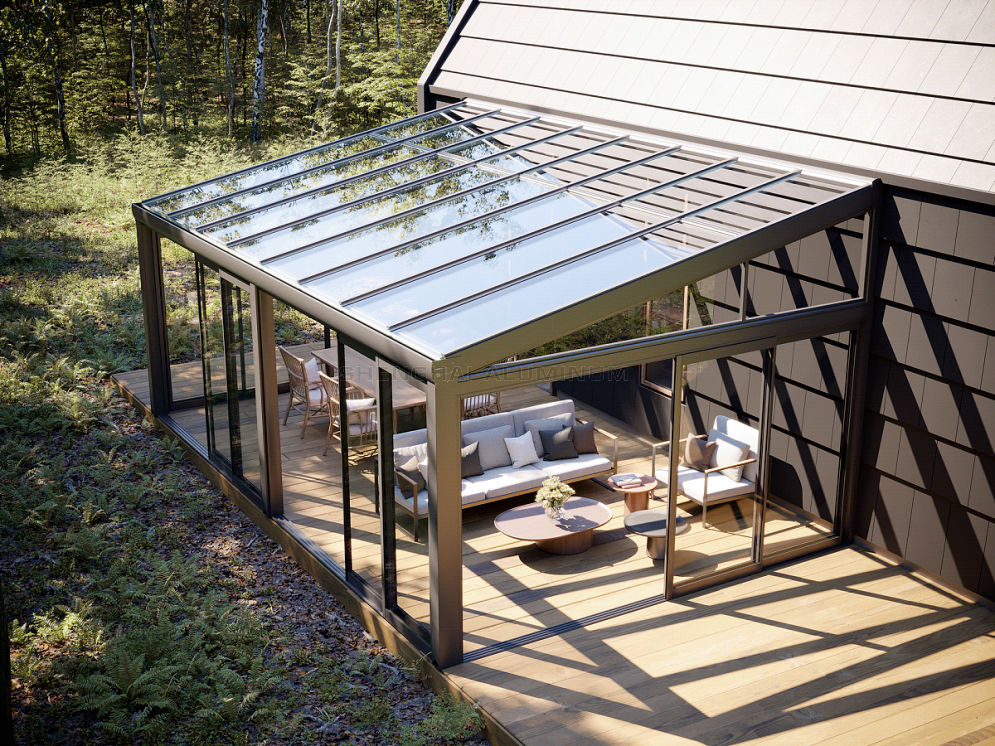
System Sunrooms: The frame requires large aluminum profiles, and the on-site structural support features a flexible hinged structure, suitable for a wider range of site conditions, with robust waterproofing systems to control structural deformation. From profile molding and hardware to sealing processes, everything undergoes rigorous testing. System sunrooms are available in arched, flat-roof, gable-roof, and multi-sloped styles, each with its own advantages, allowing homeowners to choose freely. In contrast, ordinary sunrooms are generally flat-roofed, square structures with limited design options.
We know that the 110 and 130 system sunrooms use independently developed high-strength aluminum alloy profiles with a wall thickness of 3.0mm. The structural and finishing layers are combined separately, with a screwless design for a simple and aesthetically pleasing look. The T-shaped angle aluminum structure connection design makes them more robust and sturdy, less prone to deformation, and more resistant to wind pressure. They feature a universal, large water tank for a luxurious, grand appearance. LED strip lighting effects are also available. The highly sealed structure ensures a leak-proof seal and provides superior thermal insulation, heat insulation, waterproofing, and UV protection.
Insulated Aluminum Frame: Constructed using a thermal break technology, it uses PA66GF25 nylon thermal insulation strips to block heat transfer. This reduces outdoor heat infiltration in summer and retains indoor temperature in winter, resulting in a comfortable year-round temperature.
Energy-Saving Glass Configuration: Double-glazed or Low-E glass. This type of energy-saving glass significantly reduces heat transfer and loss, reducing the need for indoor heating and cooling at the source.
Insulated Roofing Panels: If the sunroom roof area is large and exposed to severe summer sun, a dedicated insulated roofing panel with a foam insulation layer can be used. This effectively reflects direct solar radiation, preventing the greenhouse effect caused by excessive sunlight.
2. UV Protection
Low-E Coated Glass: A core component, it reflects the vast majority of harmful ultraviolet rays while reducing glare and preventing furniture, carpets, and soft furnishings from fading and aging due to sun exposure.
Optional Tinted/Reflective Glass: Tinted or reflective glass can be selected based on home style and sun protection needs to further enhance sun protection while maintaining indoor privacy.
Integrated Sunshade Accessories: Combined with adjustable blinds, sunshades, etc., they allow free control of sunlight, blocking strong light and ultraviolet rays while adjusting the amount of light as needed, further enhancing indoor comfort.
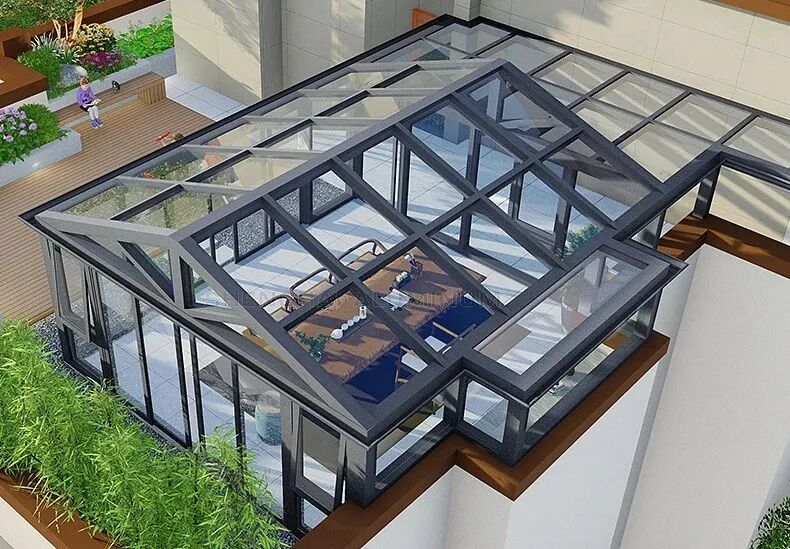
1. Material of Sunroom Profiles
The main materials used for sunroom profiles are aluminum alloy, thermally broken aluminum, and PVC. Aluminum profiles offer high strength and corrosion resistance, but are relatively expensive. Thermally broken aluminum profiles incorporate thermal insulation strips, providing good thermal insulation at a moderate price. PVC profiles are cheaper, but have lower strength and weather resistance. Therefore, when choosing sunroom profiles, we need to select the appropriate material based on our budget and usage needs.
2. Surface Treatment of Sunroom Profiles
The main surface treatments for sunroom profiles include anodizing, powder coating, and electrophoretic coating. Anodizing improves the profile's corrosion and wear resistance, but offers limited color options. Electrophoretic coating provides excellent adhesion and corrosion resistance, and offers a wide range of colors. Powder coating provides good corrosion resistance and decorative effects, but the coating is relatively thin. Therefore, when choosing sunroom profiles, it's essential to select the appropriate surface treatment method based on your preferences and the intended use environment.
3. Profile Cross-Section Structure
The cross-sectional structures of sunroom profiles are mainly three types: solid, hollow, and multi-cavity. Solid profiles offer high strength and stability but are heavier. Hollow profiles provide good insulation and are lighter, but have lower strength. Multi-cavity profiles, by adding a supporting structure to the hollow structure, offer both good insulation and high strength. Therefore, when choosing sunroom profiles, we need to select the appropriate cross-sectional structure based on our usage needs and budget.
Aluminum sunrooms are widely used in villa courtyards, terrace enclosures, cafe leisure spaces, and commercial skylights. We understand that aluminum sunroom systems are complex and diverse in structure, but for professional aluminum sunroom manufacturers, this is a testament to their expertise and strength. Shenghai Aluminum primarily deals in aluminum materials for doors and windows, including sliding doors, thermally broken aluminum, and sunrooms, all of which we can easily handle. If you would like to learn more about aluminum frame for sunrooms, please contact us immediately.
1. Aluminum frame sunroom is mainly used for drying clothes or storing miscellaneous items. Therefore, ensuring basic safety and functionality is sufficient. For the facade, ordinary sliding windows are practical and affordable, or a combination of casement and sliding windows can be used. Laminated glass should be installed at the top for safety. Other needs such as thermal insulation can be largely ignored, a standard non-insulated thermally broken aluminum sunroom is generally adequate.
2.Aluminum sunroom is for use as a functional space, such as a living room, study, or leisure area. In this case, the focus should be on the sunroom's insulation, ventilation, sun protection, and waterproofing. It's recommended to choose a sunroom frame with a thermal break structure. For the overall glass configuration, double-glazed, low-e, laminated glass is recommended for the roof, and casement windows with improved sealing performance are needed on the facade. The number of operable windows can be increased, and sunshades and blinds can be added.
3.If it is used for growing flowers and grass or creating a landscape, then the configuration should be improved in terms of ventilation and aesthetics, such as appropriately increasing the opening area of the facade, and paying more attention to aesthetics and visual comfort in the overall design and details.
Standard Sunroom VS System Sunroom
Standard Sunroom: Its frame is generally made of steel or ordinary aluminum, not systematically developed, and uses readily available materials from the market, randomly selected and assembled by cutting and splicing profiles. It focuses on basic functionality, and parameters such as profile wall thickness and connector strength lack uniform standards, resulting in inconsistent wind pressure resistance and waterproofing performance. The surface material is generally a polycarbonate sheet or another plastic, which generates significant noise from vibration during rain; the surface is also prone to fogging. It is difficult to clean, ages quickly, and will yellow and harden. It is prone to cracking, has poor heat insulation, and serious water seepage after cracking.System Sunrooms: The frame requires large aluminum profiles, and the on-site structural support features a flexible hinged structure, suitable for a wider range of site conditions, with robust waterproofing systems to control structural deformation. From profile molding and hardware to sealing processes, everything undergoes rigorous testing. System sunrooms are available in arched, flat-roof, gable-roof, and multi-sloped styles, each with its own advantages, allowing homeowners to choose freely. In contrast, ordinary sunrooms are generally flat-roofed, square structures with limited design options.
We know that the 110 and 130 system sunrooms use independently developed high-strength aluminum alloy profiles with a wall thickness of 3.0mm. The structural and finishing layers are combined separately, with a screwless design for a simple and aesthetically pleasing look. The T-shaped angle aluminum structure connection design makes them more robust and sturdy, less prone to deformation, and more resistant to wind pressure. They feature a universal, large water tank for a luxurious, grand appearance. LED strip lighting effects are also available. The highly sealed structure ensures a leak-proof seal and provides superior thermal insulation, heat insulation, waterproofing, and UV protection.
How Aluminum Sunrooms Provide Heat Insulation and UV Protection
1. Multiple Insulation TechnologiesInsulated Aluminum Frame: Constructed using a thermal break technology, it uses PA66GF25 nylon thermal insulation strips to block heat transfer. This reduces outdoor heat infiltration in summer and retains indoor temperature in winter, resulting in a comfortable year-round temperature.
Energy-Saving Glass Configuration: Double-glazed or Low-E glass. This type of energy-saving glass significantly reduces heat transfer and loss, reducing the need for indoor heating and cooling at the source.
Insulated Roofing Panels: If the sunroom roof area is large and exposed to severe summer sun, a dedicated insulated roofing panel with a foam insulation layer can be used. This effectively reflects direct solar radiation, preventing the greenhouse effect caused by excessive sunlight.
2. UV Protection
Low-E Coated Glass: A core component, it reflects the vast majority of harmful ultraviolet rays while reducing glare and preventing furniture, carpets, and soft furnishings from fading and aging due to sun exposure.
Optional Tinted/Reflective Glass: Tinted or reflective glass can be selected based on home style and sun protection needs to further enhance sun protection while maintaining indoor privacy.
Integrated Sunshade Accessories: Combined with adjustable blinds, sunshades, etc., they allow free control of sunlight, blocking strong light and ultraviolet rays while adjusting the amount of light as needed, further enhancing indoor comfort.
How to Choose Aluminum Frames for Sunrooms
Choosing the right aluminum frame is crucial when installing a sunroom. The quality of the frame directly affects the sunroom's lifespan, safety, and aesthetics. So, what aspects should we consider when selecting sunroom frame materials?1. Material of Sunroom Profiles
The main materials used for sunroom profiles are aluminum alloy, thermally broken aluminum, and PVC. Aluminum profiles offer high strength and corrosion resistance, but are relatively expensive. Thermally broken aluminum profiles incorporate thermal insulation strips, providing good thermal insulation at a moderate price. PVC profiles are cheaper, but have lower strength and weather resistance. Therefore, when choosing sunroom profiles, we need to select the appropriate material based on our budget and usage needs.
2. Surface Treatment of Sunroom Profiles
The main surface treatments for sunroom profiles include anodizing, powder coating, and electrophoretic coating. Anodizing improves the profile's corrosion and wear resistance, but offers limited color options. Electrophoretic coating provides excellent adhesion and corrosion resistance, and offers a wide range of colors. Powder coating provides good corrosion resistance and decorative effects, but the coating is relatively thin. Therefore, when choosing sunroom profiles, it's essential to select the appropriate surface treatment method based on your preferences and the intended use environment.
3. Profile Cross-Section Structure
The cross-sectional structures of sunroom profiles are mainly three types: solid, hollow, and multi-cavity. Solid profiles offer high strength and stability but are heavier. Hollow profiles provide good insulation and are lighter, but have lower strength. Multi-cavity profiles, by adding a supporting structure to the hollow structure, offer both good insulation and high strength. Therefore, when choosing sunroom profiles, we need to select the appropriate cross-sectional structure based on our usage needs and budget.
Aluminum sunrooms are widely used in villa courtyards, terrace enclosures, cafe leisure spaces, and commercial skylights. We understand that aluminum sunroom systems are complex and diverse in structure, but for professional aluminum sunroom manufacturers, this is a testament to their expertise and strength. Shenghai Aluminum primarily deals in aluminum materials for doors and windows, including sliding doors, thermally broken aluminum, and sunrooms, all of which we can easily handle. If you would like to learn more about aluminum frame for sunrooms, please contact us immediately.