How to Choose Outdoor Aluminium Doors for Exterior Projects
Updated: 11 May 2026
Outdoor doors are constantly exposed to complex environmental conditions—including heavy rain, high humidity, extreme heat, and intense UV radiation. If the materials and structural design are not carefully selected, issues such as fading, deformation, water leakage, and rusting can easily arise over time, compromising the building's aesthetic appeal and driving up maintenance and replacement costs.
Particularly in projects involving villas, hotels, apartment complexes, commercial buildings, and coastal developments, outdoor doors must possess not only excellent wind resistance, waterproofing capabilities, and corrosion resistance but also the capacity to ensure stable, long-term performance.
Compared to traditional wooden and steel doors, aluminium doors have emerged as the preferred door and window solution for modern outdoor architectural projects, thanks to their superior weather resistance, rust-proof nature, resistance to deformation, and low maintenance requirements.
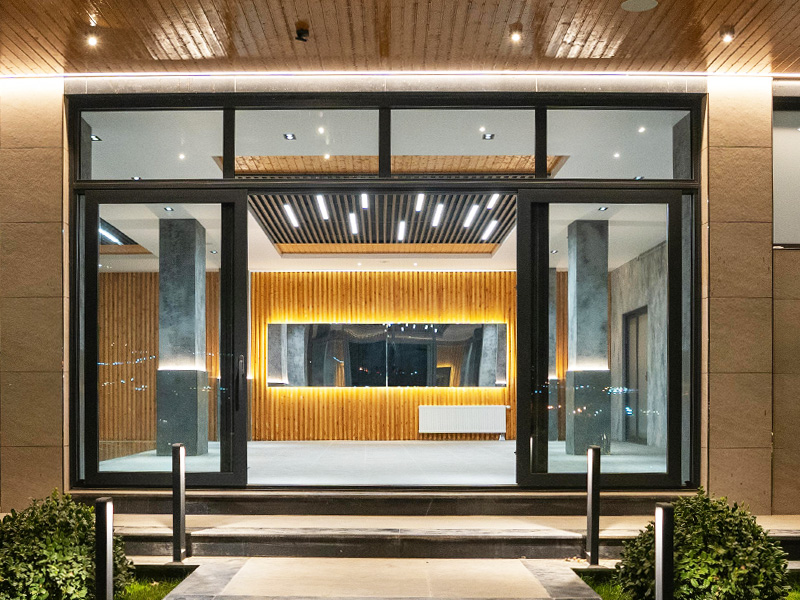
Steel doors, despite their superior strength, are susceptible to rust and corrosion in coastal, high-humidity, or rainy regions. Additionally, their substantial weight can lead to structural issues over time, such as door sagging and accelerated wear on hardware components.
In contrast, outdoor aluminium doors offer distinct advantages, including inherent resistance to corrosion and rust, as well as exceptional weather resistance; even after prolonged exposure to outdoor elements, they remain highly resistant to deformation and aging. Moreover, aluminum alloy combines lightweight properties with high structural strength, effectively reducing the structural load on buildings while simultaneously meeting the demands of modern architecture for large-format doors, ultra-narrow frames, and high-end custom designs. Consequently, they are gaining increasing favor in projects involving villas, hotels, and commercial buildings.
Aluminum doors possess inherent corrosion resistance; even when exposed for extended periods to coastal salt spray, high humidity, heavy rainfall, or intense UV radiation, they remain highly resistant to rust, corrosion and aging. Capable of maintaining stable performance over the long term, they are ideally suited for use in outdoor architectural projects.
Lightweight Yet High-Strength
Compared to traditional steel doors, aluminum alloys are significantly lighter, effectively reducing structural load-bearing pressure on a building. Simultaneously, through intelligent profile structure design, they maintain exceptional wind-load resistance and structural stability. Making them particularly suitable for high-rise buildings, large-format door systems, and commercial engineering projects.
Diverse Surface Finishing Options
Aluminum outdoor doors support a wide array of surface finishing techniques, including anodizing, powder coating, wood-grain transfer printing, and fluorocarbon spraying. These processes not only enhance the aesthetic texture of the product but also boost its resistance to UV radiation, fading, and corrosion, ensuring the door retains its visual appeal for years to come.
Large-Scale Customization Capabilities
Aluminum profiles boast excellent machinability, enabling the realization of diverse design requirements—ranging from ultra-tall and extra-wide dimensions to ultra-narrow frames and floor-to-ceiling glass doors. This capability allows them to fully meet the demands of modern architecture for expansive views, a sense of openness, and high-end customized design solutions.
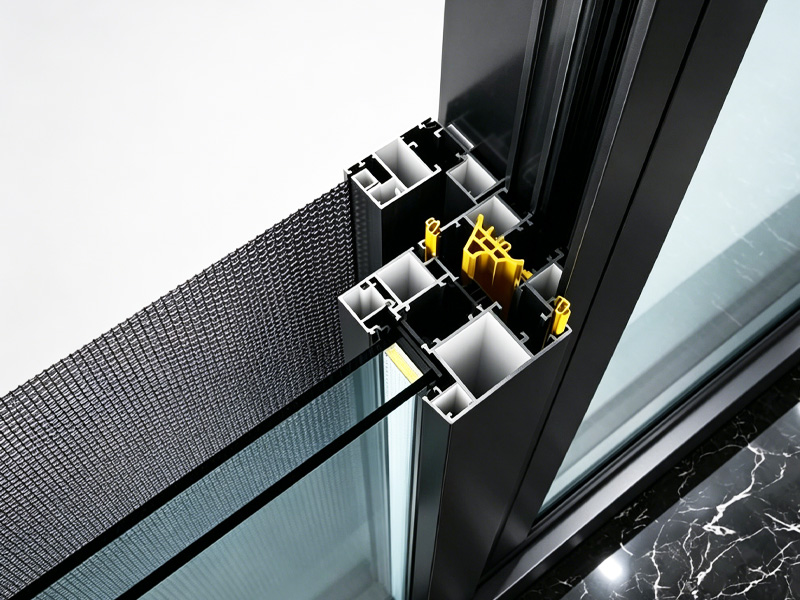
Aluminum sliding doors are a very common type of door in outdoor projects. They do not occupy additional space when opened and effectively enhance indoor natural lighting and air circulation. The doors operate smoothly and silently; combined with a multi-layer sealing structure, they effectively boost resistance to wind, water, and dust, as well as sound insulation—making them ideally suited for the large-format glazing designs typical of modern architecture.
Application: Balconies, terraces, apartments, cafes, commercial spaces, and similar settings.
Aluminum Swing Door
Aluminum swing doors are available in two configurations: single-leaf and double-leaf. Their overall structure is exceptionally sturdy, offering excellent sealing, anti-theft security, sound insulation, and thermal insulation properties. Their classic and stately opening mechanism aligns perfectly with the design requirements of high-end residential and commercial buildings.
Application: Villa main gates, residential entry doors, office building exterior doors, commercial building entrances, and other settings where high security is a priority.
Aluminum Folding Door
Aluminum folding door feature a multi-panel, synchronized folding design that allows for expansive, full-width openings, creating a seamless and open connection between indoor and outdoor spaces. Highly flexible in operation and maximizing space utilization, they effortlessly create the visual aesthetic of a modern, open-plan environment.
Application: Courtyards, outdoor dining areas, sunrooms, landscaped zones, leisure areas, and other outdoor projects requiring an open-plan design.
Aluminum Glass Door
Aluminum glass door combine high-strength aluminum frames with safety-tempered glass, offering not only a modern, minimalist aesthetic but also an optimal balance of natural lighting, visual transparency, and security. Depending on project requirements, they can be fitted with insulated, Low-E, or laminated glass to further enhance thermal insulation, soundproofing, and protection. They support ultra-narrow frame profiles and panoramic floor-to-ceiling designs, aligning perfectly with contemporary high-end architectural styles.
Application: Commercial storefronts, hotel entrances, villa floor-to-ceiling doors, high-end residential properties, and showrooms.
Among these, 6063-T5 is the most widely used standard profile in the door and window industry; it offers excellent extrusion properties and surface finish capabilities, making it suitable for most standard outdoor projects. In contrast, 6061 offers superior structural strength and wind-load resistance, making it a better choice for coastal regions, high-rise buildings, and projects involving large-format door units.
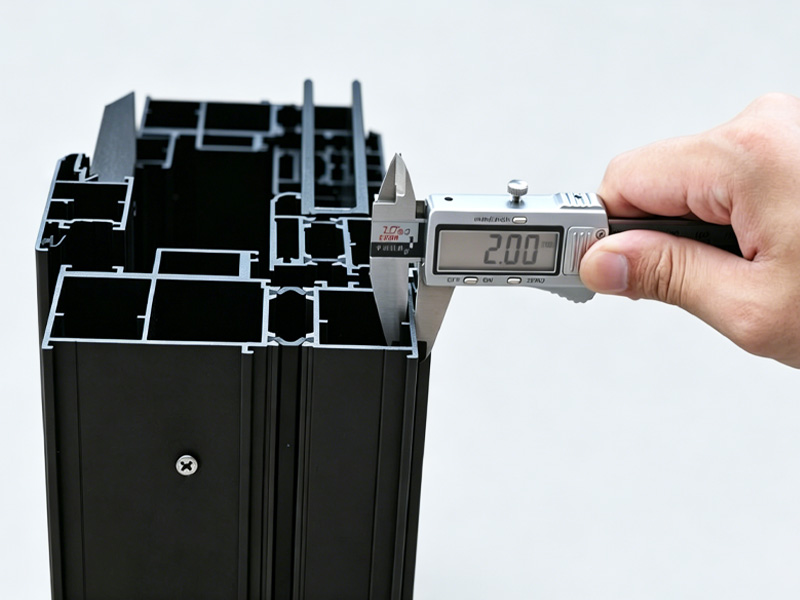
Beyond the material itself, the profile thickness directly affects the stability of the door unit. For standard outdoor applications, a door frame thickness of at least 1.2 mm is generally recommended. However, for coastal areas, environments subject to high wind pressure, or large-scale engineering projects, the use of thickened profiles—ranging from 1.5 mm to 2.0 mm—is highly advisable to ensure that the door remains free from deformation or structural instability over the long term.
Surface treatment processes are equally vital. Varying climatic conditions across regions impose distinct requirements for the weather resistance of door units. For instance, in regions characterized by high temperatures and intense UV radiation, powder coating effectively enhances resistance to color fading. Conversely, in high-humidity or coastal environments, anodizing provides superior corrosion resistance.
Regarding glass configuration, tempered glass is typically the preferred choice for outdoor doors due to its superior safety features; even if shattered, it fractures into small, blunt fragments rather than sharp shards. For projects with stringent requirements for thermal insulation and soundproofing, double-glazed insulated glass or Low-E glass is highly recommended to enhance overall energy efficiency and user comfort.
Furthermore, issues that arise with many outdoor doors over time are often not attributable to the aluminum profiles themselves but rather to substandard hardware. Consequently, the quality of hinges, rollers, locking mechanisms, and weatherstripping directly influences the door's service life and structural stability. The integration of high-quality 304 stainless steel hardware, multi-point locking systems, and watertight sealing structures effectively enhances overall security, weatherproofing capabilities, and the long-term user experience.
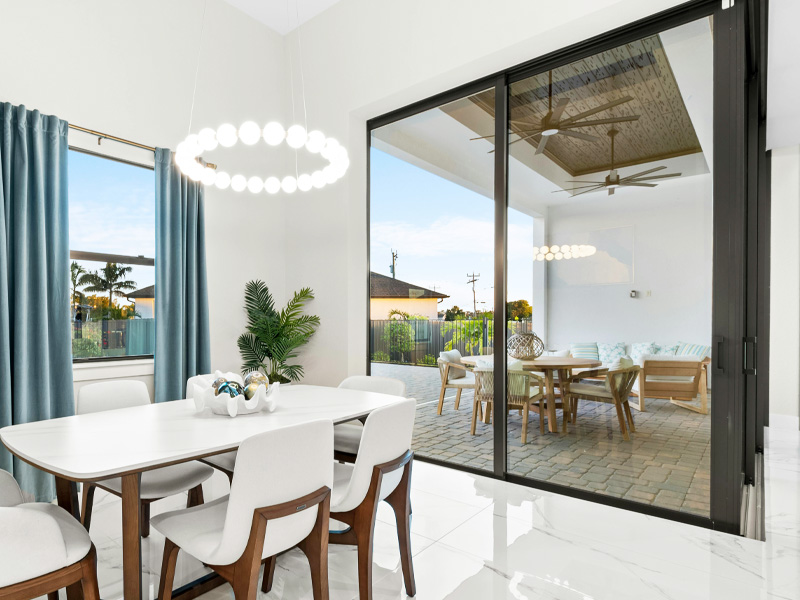 Outdoor Aluminum Door Solutions for Different Markets
Due to varying climatic conditions across different countries and regions, the requirements for outdoor aluminum doors can differ significantly.
For example, the Middle Eastern market is characterized by prolonged periods of high temperatures and intense UV radiation; consequently, it is best served by highly weather-resistant powder coatings and thermally broken profiles. This combination effectively minimizes indoor heat transfer while enhancing overall durability.
In contrast, the Southeast Asian market is defined by high humidity, heavy rainfall, and frequent typhoons. As a result, structural designs in this region prioritize wind resistance, waterproofing, and corrosion resistance. Solutions typically incorporate thickened profiles, typhoon-resistant structural features, and advanced corrosion-resistant surface treatments.
The European market places a strong emphasis on energy efficiency and thermal insulation. Consequently, thermally broken aluminum structures, double-glazed insulated glass units, and high-performance sealing systems have become standard requirements for outdoor door projects throughout the region.
Custom Aluminum Door Solutions
As architectural design requirements become increasingly diverse, standardized door and window products are often insufficient to meet the specific needs of every engineering project. Consequently, an increasing number of clients are opting for customized outdoor aluminum door solutions.
As a primary manufacturer of aluminum profiles with 16 years of industry experience, Shenghai Aluminum specializes in the R&D, production, and advanced processing of outdoor aluminum door systems. As a primary manufacturer of aluminum profiles with 16 years of industry experience, Shenghai Aluminum specializes in the R&D, production and advanced processing of outdoor aluminum door systems. We offer comprehensive one-stop customization solutions – from aluminum profile extrusion to final assembly of finished doors – tailored to the unique requirements of each project.
We offer extensive customization options covering door dimensions, structural design, opening mechanisms, surface finishes, glass configurations, and hardware systems. Furthermore, we possess comprehensive CNC machining capabilities—including cutting, punching, tapping, bending, welding, and assembly—enabling us to significantly enhance project delivery efficiency while ensuring consistent product quality.
Leveraging our extensive project experience across diverse markets—including the Middle East, Southeast Asia, and Europe. We are uniquely positioned to provide clients with outdoor aluminum door solutions that are optimally suited to local climatic conditions and architectural standards.
Particularly in projects involving villas, hotels, apartment complexes, commercial buildings, and coastal developments, outdoor doors must possess not only excellent wind resistance, waterproofing capabilities, and corrosion resistance but also the capacity to ensure stable, long-term performance.
Compared to traditional wooden and steel doors, aluminium doors have emerged as the preferred door and window solution for modern outdoor architectural projects, thanks to their superior weather resistance, rust-proof nature, resistance to deformation, and low maintenance requirements.
Why Choose Aluminium for Outdoor Doors
While wooden doors boast naturally beautiful grain patterns, prolonged use in outdoor environments leaves them vulnerable to rain, humidity, and UV radiation. Over time, they are prone to issues such as mold, rot, cracking, and deformation. Furthermore, they require frequent maintenance—including repainting, waterproofing, and anti-corrosion treatments—resulting in high long-term upkeep costs.Steel doors, despite their superior strength, are susceptible to rust and corrosion in coastal, high-humidity, or rainy regions. Additionally, their substantial weight can lead to structural issues over time, such as door sagging and accelerated wear on hardware components.
In contrast, outdoor aluminium doors offer distinct advantages, including inherent resistance to corrosion and rust, as well as exceptional weather resistance; even after prolonged exposure to outdoor elements, they remain highly resistant to deformation and aging. Moreover, aluminum alloy combines lightweight properties with high structural strength, effectively reducing the structural load on buildings while simultaneously meeting the demands of modern architecture for large-format doors, ultra-narrow frames, and high-end custom designs. Consequently, they are gaining increasing favor in projects involving villas, hotels, and commercial buildings.
Advantages of Outdoor Aluminium Doors
Exceptional Weather ResistanceAluminum doors possess inherent corrosion resistance; even when exposed for extended periods to coastal salt spray, high humidity, heavy rainfall, or intense UV radiation, they remain highly resistant to rust, corrosion and aging. Capable of maintaining stable performance over the long term, they are ideally suited for use in outdoor architectural projects.
Lightweight Yet High-Strength
Compared to traditional steel doors, aluminum alloys are significantly lighter, effectively reducing structural load-bearing pressure on a building. Simultaneously, through intelligent profile structure design, they maintain exceptional wind-load resistance and structural stability. Making them particularly suitable for high-rise buildings, large-format door systems, and commercial engineering projects.
Diverse Surface Finishing Options
Aluminum outdoor doors support a wide array of surface finishing techniques, including anodizing, powder coating, wood-grain transfer printing, and fluorocarbon spraying. These processes not only enhance the aesthetic texture of the product but also boost its resistance to UV radiation, fading, and corrosion, ensuring the door retains its visual appeal for years to come.
Large-Scale Customization Capabilities
Aluminum profiles boast excellent machinability, enabling the realization of diverse design requirements—ranging from ultra-tall and extra-wide dimensions to ultra-narrow frames and floor-to-ceiling glass doors. This capability allows them to fully meet the demands of modern architecture for expansive views, a sense of openness, and high-end customized design solutions.
Types of Outdoor Aluminium Doors
Aluminum Sliding DoorAluminum sliding doors are a very common type of door in outdoor projects. They do not occupy additional space when opened and effectively enhance indoor natural lighting and air circulation. The doors operate smoothly and silently; combined with a multi-layer sealing structure, they effectively boost resistance to wind, water, and dust, as well as sound insulation—making them ideally suited for the large-format glazing designs typical of modern architecture.
Application: Balconies, terraces, apartments, cafes, commercial spaces, and similar settings.
Aluminum Swing Door
Aluminum swing doors are available in two configurations: single-leaf and double-leaf. Their overall structure is exceptionally sturdy, offering excellent sealing, anti-theft security, sound insulation, and thermal insulation properties. Their classic and stately opening mechanism aligns perfectly with the design requirements of high-end residential and commercial buildings.
Application: Villa main gates, residential entry doors, office building exterior doors, commercial building entrances, and other settings where high security is a priority.
Aluminum Folding Door
Aluminum folding door feature a multi-panel, synchronized folding design that allows for expansive, full-width openings, creating a seamless and open connection between indoor and outdoor spaces. Highly flexible in operation and maximizing space utilization, they effortlessly create the visual aesthetic of a modern, open-plan environment.
Application: Courtyards, outdoor dining areas, sunrooms, landscaped zones, leisure areas, and other outdoor projects requiring an open-plan design.
Aluminum Glass Door
Aluminum glass door combine high-strength aluminum frames with safety-tempered glass, offering not only a modern, minimalist aesthetic but also an optimal balance of natural lighting, visual transparency, and security. Depending on project requirements, they can be fitted with insulated, Low-E, or laminated glass to further enhance thermal insulation, soundproofing, and protection. They support ultra-narrow frame profiles and panoramic floor-to-ceiling designs, aligning perfectly with contemporary high-end architectural styles.
Application: Commercial storefronts, hotel entrances, villa floor-to-ceiling doors, high-end residential properties, and showrooms.
Key Factors When Choosing Outdoor Aluminum Doors
When selecting outdoor aluminium doors, the specific aluminum alloy grade and profile thickness are critical factors. Currently, the most common aluminum profiles for doors and windows on the market are 6063-T5 and 6061.Among these, 6063-T5 is the most widely used standard profile in the door and window industry; it offers excellent extrusion properties and surface finish capabilities, making it suitable for most standard outdoor projects. In contrast, 6061 offers superior structural strength and wind-load resistance, making it a better choice for coastal regions, high-rise buildings, and projects involving large-format door units.
Beyond the material itself, the profile thickness directly affects the stability of the door unit. For standard outdoor applications, a door frame thickness of at least 1.2 mm is generally recommended. However, for coastal areas, environments subject to high wind pressure, or large-scale engineering projects, the use of thickened profiles—ranging from 1.5 mm to 2.0 mm—is highly advisable to ensure that the door remains free from deformation or structural instability over the long term.
Surface treatment processes are equally vital. Varying climatic conditions across regions impose distinct requirements for the weather resistance of door units. For instance, in regions characterized by high temperatures and intense UV radiation, powder coating effectively enhances resistance to color fading. Conversely, in high-humidity or coastal environments, anodizing provides superior corrosion resistance.
Regarding glass configuration, tempered glass is typically the preferred choice for outdoor doors due to its superior safety features; even if shattered, it fractures into small, blunt fragments rather than sharp shards. For projects with stringent requirements for thermal insulation and soundproofing, double-glazed insulated glass or Low-E glass is highly recommended to enhance overall energy efficiency and user comfort.
Furthermore, issues that arise with many outdoor doors over time are often not attributable to the aluminum profiles themselves but rather to substandard hardware. Consequently, the quality of hinges, rollers, locking mechanisms, and weatherstripping directly influences the door's service life and structural stability. The integration of high-quality 304 stainless steel hardware, multi-point locking systems, and watertight sealing structures effectively enhances overall security, weatherproofing capabilities, and the long-term user experience.
Due to varying climatic conditions across different countries and regions, the requirements for outdoor aluminum doors can differ significantly.
For example, the Middle Eastern market is characterized by prolonged periods of high temperatures and intense UV radiation; consequently, it is best served by highly weather-resistant powder coatings and thermally broken profiles. This combination effectively minimizes indoor heat transfer while enhancing overall durability.
In contrast, the Southeast Asian market is defined by high humidity, heavy rainfall, and frequent typhoons. As a result, structural designs in this region prioritize wind resistance, waterproofing, and corrosion resistance. Solutions typically incorporate thickened profiles, typhoon-resistant structural features, and advanced corrosion-resistant surface treatments.
The European market places a strong emphasis on energy efficiency and thermal insulation. Consequently, thermally broken aluminum structures, double-glazed insulated glass units, and high-performance sealing systems have become standard requirements for outdoor door projects throughout the region.
Custom Aluminum Door Solutions
As architectural design requirements become increasingly diverse, standardized door and window products are often insufficient to meet the specific needs of every engineering project. Consequently, an increasing number of clients are opting for customized outdoor aluminum door solutions.
As a primary manufacturer of aluminum profiles with 16 years of industry experience, Shenghai Aluminum specializes in the R&D, production, and advanced processing of outdoor aluminum door systems. As a primary manufacturer of aluminum profiles with 16 years of industry experience, Shenghai Aluminum specializes in the R&D, production and advanced processing of outdoor aluminum door systems. We offer comprehensive one-stop customization solutions – from aluminum profile extrusion to final assembly of finished doors – tailored to the unique requirements of each project.
We offer extensive customization options covering door dimensions, structural design, opening mechanisms, surface finishes, glass configurations, and hardware systems. Furthermore, we possess comprehensive CNC machining capabilities—including cutting, punching, tapping, bending, welding, and assembly—enabling us to significantly enhance project delivery efficiency while ensuring consistent product quality.
Leveraging our extensive project experience across diverse markets—including the Middle East, Southeast Asia, and Europe. We are uniquely positioned to provide clients with outdoor aluminum door solutions that are optimally suited to local climatic conditions and architectural standards.