What Is the Best Way to Choose Bi-Fold Doors
Updated: 5 Jun 2026
However, choosing the right bi-fold door involves more than selecting an attractive design. Factors such as opening size, installation location, frame material, glass specifications, thermal performance, hardware quality, and supplier capabilities all affect the door’s long-term performance and value.
This guide will help you understand the main factors to consider when selecting bi-fold doors for your project.
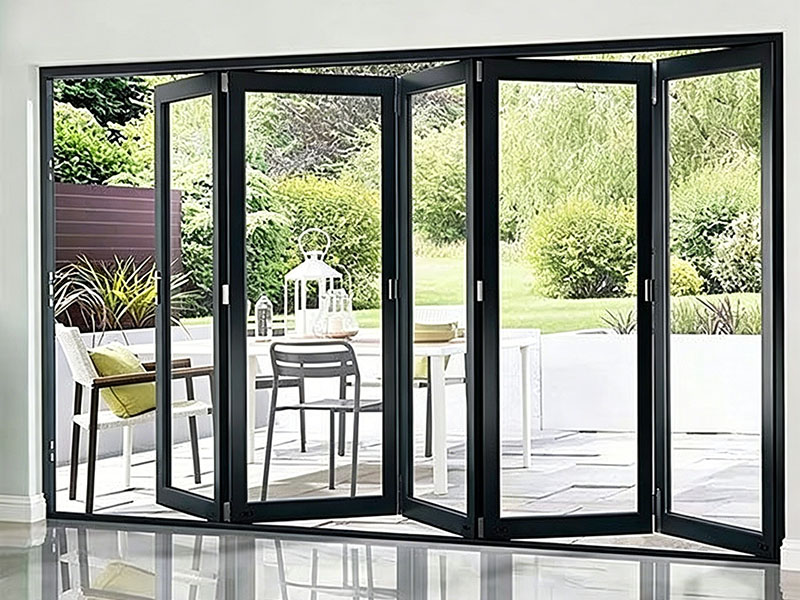
Step 1: Define Your Project Requirements
Different projects have different requirements for bi-fold doors, so before choosing a bi-fold door, first determine its purpose and installation location to improve project progress.|
Installation Area |
Main Considerations |
|
Patio or Garden |
Weather resistance, large opening |
|
Balcony |
Wind resistance, safety |
|
Living Room |
Natural light, aesthetics |
|
Coastal Property |
Corrosion resistance |
|
Hotel or Resort |
Durability, appearance |
|
Restaurant or Café |
Frequent operation, smooth performance |
|
Commercial Space |
Strength, security, long-term reliability |
Understanding the application helps determine the most suitable door system, glass specification, and hardware configuration.
Step 2: Determine the Opening Size
When selecting a folding door, the dimensions of the opening are one of the most important factors. A larger opening usually requires more door panels or bigger individual panels. In turn, increases the demands on the hardware system’s load-bearing capacity and structural strength.|
Opening Width |
Recommended Configuration |
|
Up to 2m |
2–3 Panels |
|
2–4m |
3–5 Panels |
|
4–6m |
5–7 Panels |
|
Above 6m |
6–10 Panels |
You should also consider the following factors when choosing a folding door:
Daily Usage Frequency
Will the door be used frequently? If so, a traffic door that opens independently like a standard hinged door can provide more convenient access.
Panel Stacking Configuration
Do you want all panels to fold to one side, or would you prefer them to split and fold to both sides?
Available Side Space
Make sure there is enough wall space on the side where the panels will stack when the door is fully opened.
Clear Opening Width
When the panels are folded, some space will still be occupied by the stacked panels. Check whether the remaining opening width meets your needs.
Choosing the right configuration will improve daily convenience, ensure smooth operation, and make the most of the available space.
Step 3: Choose the Right Frame Material
The frame material affects durability, maintenance requirements, appearance, and overall performance.Aluminum
Aluminum is the preferred choice for most modern residential and commercial projects because it offers:
High strength and structural stability
Slim sightlines and larger glass areas
Excellent corrosion resistance
Low maintenance requirements
Long service life
Support for large panel sizes
Wood
Wood provides a traditional and natural appearance.
Warm aesthetic appeal
Classic architectural style
However, wood typically requires regular maintenance and may warp, crack, or rot in humid environments.
uPVC
uPVC is often selected for budget-conscious projects.
Lower initial cost
Basic thermal insulation performance
However, wider frames are usually needed to support larger glass panels, which can reduce visibility and design flexibility.
Which Material Is Best?
For most projects, aluminum bi-fold doors provide the best balance of durability, aesthetics, strength, and customization flexibility.
Step 4: Select the Right Glass
Since glass occupies most of the door area, choosing the right glazing option is critical.For Better Energy Efficiency
Double glazed glass
Low-E glass
Benefits include:
Reduced heat transfer
Improved indoor comfort
Lower energy consumption
For Maximum Thermal Performance
Triple glazed glass
This option is ideal for cold climates and high-performance buildings.
For Enhanced Safety and Security
Tempered glass
Laminated glass
These options offer improved impact resistance and increased protection against accidental breakage.
For Noise Reduction
Laminated glass is often the preferred solution because it helps reduce outside noise and improves indoor comfort.
|
Requirement |
Recommended Glass |
|
Energy Efficiency |
Double Glazing, Low-E Glass |
|
Cold Climate |
Triple Glazing |
|
Noise Reduction |
Laminated Glass |
|
Enhanced Safety |
Tempered Glass, Laminated Glass |
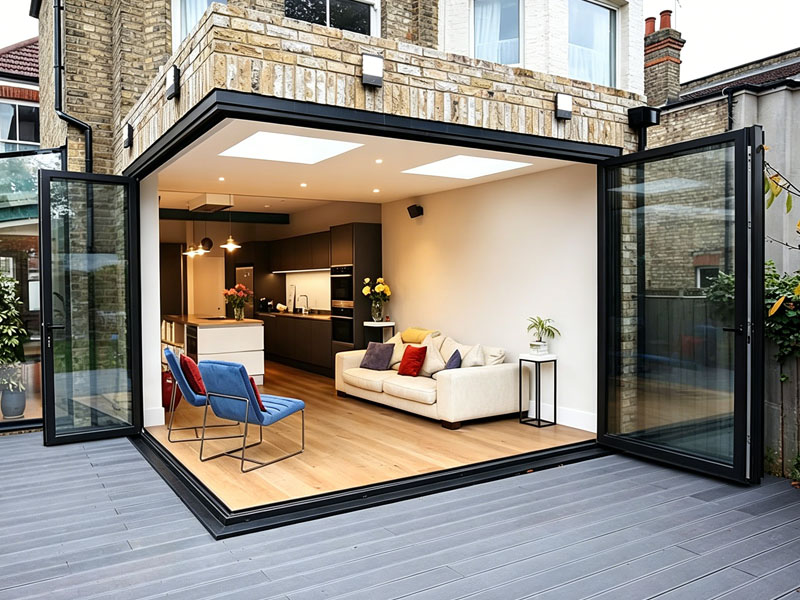
Step 5: Evaluate Thermal and Weather Performance
A visually appealing door should also perform well in local climate conditions.Thermal Insulation
For colder regions or projects with strict energy-efficiency requirements, consider:
Thermal break aluminum profiles
Double or triple glazing
Multi-layer sealing systems
Reduce heat loss
Improve indoor comfort
Minimize condensation
Lower energy costs
For warm climates where insulation requirements are less demanding, standard aluminum systems may provide a more cost-effective solution.
Weather Resistance
For exterior applications, check whether the system offers:
Water tightness
Air tightness
Wind load resistance
UV resistance
These characteristics are particularly important for coastal areas, high-rise buildings, and regions with severe weather conditions.
Step 6: Evaluate Hardware Quality
Even the highest-quality aluminum profiles cannot compensate for poor hardware.Pay attention to:
Rollers
Hinges
Tracks
Handles
Locking systems
High-quality hardware provides:
Smooth and quiet operation
Better security
Reduced maintenance requirements
Longer service life
For large panels and high-traffic applications, heavy-duty hardware is especially important.
A well-designed hardware system can often be the difference between a bi-fold door that operates smoothly for many years and one that develops operational issues after a short period of use.
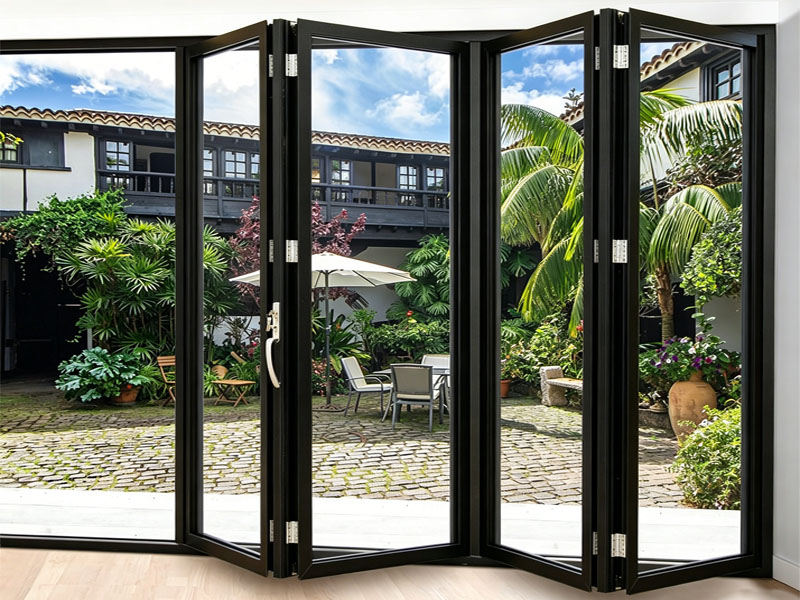
Step 7: Consider Long-Term Maintenance
Before making a final decision, consider future maintenance requirements.Ask the following questions:
Is the frame resistant to corrosion?
Will the material warp, crack, or fade?
How easy is it to clean?
Are replacement parts readily available?
Aluminum bi-fold doors are widely recognized as one of the lowest-maintenance options available and can provide decades of reliable performance when properly installed.
Step 8: Choose a Reliable Manufacturer
Product quality depends not only on design but also on manufacturing expertise.A reliable supplier should offer:
Custom dimensions
Multiple opening configurations
Various surface finishes
Customized glass options
Professional engineering support
Consistent production quality
For large residential developments, commercial projects, and international procurement, working with an experienced manufacturer can reduce project risks and ensure long-term reliability.
An additional advantage is working with a supplier that manufactures both aluminum profiles and finished door systems. This can provide better quality control, shorter lead times, and greater customization flexibility throughout the project.
Common Bi-Fold Door Sizes
Although bi-fold doors can be fully customized, the following dimensions are commonly used in residential and commercial projects:
|
Door Type |
Typical Width |
Typical Height |
|
2 Panel |
1200–1800 mm |
2100–3000 mm |
|
3 Panel |
1800–2700 mm |
2100–3000 mm |
|
4 Panel |
2400–3600 mm |
2100–3000 mm |
|
6 Panel |
3600–5400 mm |
2100–3000 mm |
|
8 Panel |
4800–7200 mm |
2100–3000 mm |
Actual dimensions should always be determined according to project requirements and structural conditions.
The best way to choose bi-fold doors is to start with your project requirements rather than focusing only on appearance. By evaluating the installation location, opening size, frame material, glass specifications, thermal performance, hardware quality, and maintenance requirements, you can select a door system that delivers long-term performance and value.
Shenghai Aluminum is a professional manufacturer of aluminum profiles. We provide customized aluminum bi-fold doors, sliding doors, windows, and architectural aluminum solutions for residential and commercial projects worldwide. Whether you need aluminum profiles, semi-finished components, or complete door systems, our team can help you find the right solution for your project.