What Size Aluminum Profile for Sliding Wardrobe Doors
Updated: 8 Oct 2026
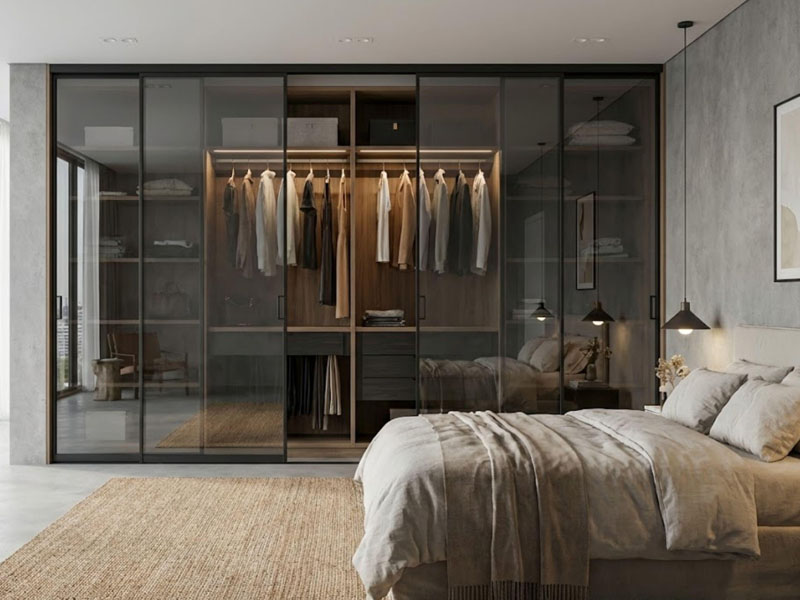
A slim aluminum frame can create a modern appearance. However, a larger door may need a stronger frame, especially when using heavy glass or mirror panels.
So, what size aluminum profile is best for sliding wardrobe doors?
There is no single size that works for every wardrobe. The right choice depends on the door height, width, panel thickness and overall weight.
This guide explains common sliding wardrobe door frame sizes and how to choose a suitable option for different designs.
Common Sliding Wardrobe Door Frame Sizes
Sliding wardrobe door frames come in different widths and shapes. Some are designed for slim, minimalist doors, while others have wider sections for additional support.The table below shows several frame width ranges used as starting points when comparing different designs.
|
Visible Frame Width |
Typical Design |
Main Consideration |
|
18–20 mm |
Slim-frame wardrobe doors |
Clean, minimalist appearance |
|
25–30 mm |
Standard framed wardrobe doors |
Balance between appearance and support |
|
35–40 mm |
Wider-frame wardrobe designs |
Space for larger sections or reinforcement |
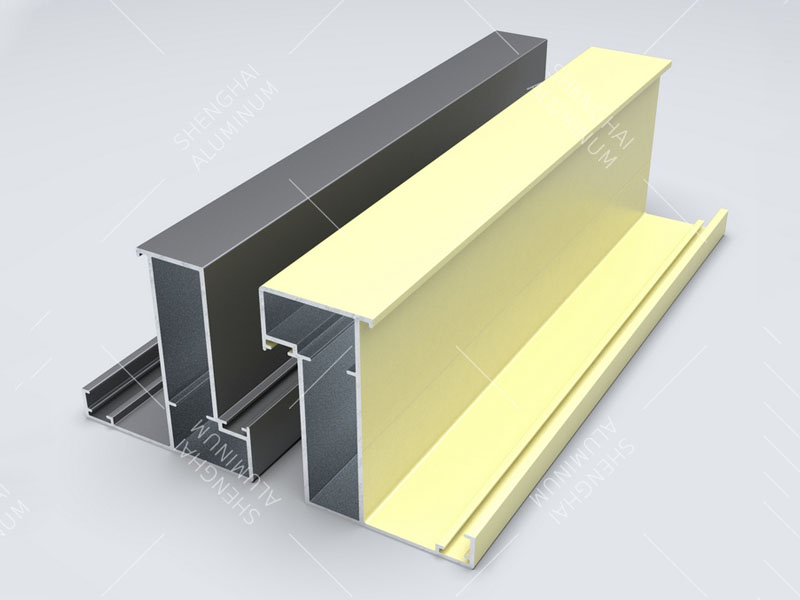
Also, the visible frame width is different from the aluminum wall thickness.
For example, two frames may both have a visible width of 20 mm but use different internal structures. One may have reinforcing ribs, while the other has a simpler cross-section.
As a result, they may perform differently even though they look similar from the outside.
How to Choose the Right Sliding Wardrobe Door Frame Size
Start With the Door Height and Width
The first step is to measure the sliding wardrobe door.A small door usually places less demand on the frame than a tall or wide door. As the dimensions increase, the frame becomes more likely to bend or twist if it is not designed correctly.
For example, a narrow wardrobe door with a lightweight panel may work well with a slim frame.
A floor-to-ceiling wardrobe door, on the other hand, may need a stiffer frame to maintain its shape.
However, this does not mean every tall door requires a wide frame.
A slim aluminum profile with a well-designed internal structure may still provide sufficient support.
The important point is to consider the complete door design rather than choosing a frame based only on its visible width.
Match the Frame Groove to the Panel Thickness
The thickness of the wardrobe door panel is another important factor.Sliding wardrobe doors can use glass, mirrors, MDF, wood-based boards or decorative panels.
Each material has different thickness and installation requirements.
For example, a frame designed for a thin mirror panel may not fit a thick MDF board.
Here are some common panel thicknesses used in wardrobe applications.
|
Panel Material |
Example Thickness |
What to Check |
|
Mirror |
4–6 mm |
Groove size, backing and fixing method |
|
Glass |
5–8 mm |
Glass type and gasket compatibility |
|
MDF or wood-based board |
16–18 mm |
Groove width and panel weight |
|
Decorative panel |
Varies |
Actual thickness and installation method |
When selecting a frame, check the groove dimensions carefully.
If rubber gaskets or other fixing materials are used, their thickness must also be considered.
A properly matched groove helps hold the panel securely and reduces unwanted movement.
Check the Aluminum Wall Thickness
Frame width and wall thickness are two different measurements.The frame width mainly affects the visible appearance and overall cross-sectional dimensions.
Wall thickness refers to the thickness of the aluminum material itself.
For some wardrobe frame designs, aluminum wall thicknesses around 1.0–1.5 mm may be considered. Other systems may require thicker or reinforced sections.
However, a thicker wall does not automatically make a better wardrobe frame.
The shape of the profile also matters.
For example, a profile with reinforcing ribs may offer better stiffness than a simple hollow section with a similar amount of aluminum.
When comparing different frames, consider the wall thickness together with the cross-sectional design, door dimensions and panel weight.
The goal is to achieve sufficient strength without adding unnecessary weight.
Consider the Weight of Glass and Mirror Doors
Glass and mirror panels are popular in modern wardrobes, but they can be relatively heavy.This makes the total door weight an important part of frame selection.
For example, consider a glass panel measuring:
Width: 800 mm
Height: 2,400 mm
Thickness: 5 mm
A glass panel of this size weighs approximately 24 kg, excluding the aluminum frame and hardware.
Once the frame, rollers and other components are added, the complete door will be heavier.
This additional weight affects the sliding system.
The rollers must support the door, while the frame needs to remain stable during opening and closing.
Before selecting a frame for a heavy panel, check the maximum door weight supported by the hardware manufacturer.
It is also important to confirm that the frame joints and panel fixing method are suitable for the application.
Decide Between Slim and Wide Frames
Slim and wide frames can both work well for sliding wardrobe doors. The better choice depends on the design and structural requirements.Slim frames
Slim frames are often chosen for modern wardrobes with glass or decorative panels.
They create a clean appearance and make the door panel more visually prominent.
However, the frame still needs enough stiffness to support the door.
For larger panels, a slim design may require a reinforced cross-section or a suitable supporting structure.
Wide frames
Wider frames create a more noticeable border around the door.
Depending on their design, they may also provide space for integrated handles, stronger corner connections or other structural features.
A wider frame is not necessarily stronger in every case, but it can offer more design flexibility.
When comparing the two options, consider appearance, panel weight and the actual frame structure.
Does a Slim Frame Work for Large Sliding Wardrobe Doors
Yes, but it depends on how the frame is designed.A slim frame does not always mean a weak frame.
The strength and stiffness of an aluminum profile depend on several factors, including its cross-sectional shape, wall thickness and internal reinforcement.
For example, two frames may have the same visible width but different depths.
The deeper profile may provide greater bending stiffness in a particular direction, depending on its geometry.
This is especially important for tall wardrobe doors.
If the frame is not stiff enough, the door may bend, twist or become difficult to align.
For large sliding wardrobe doors, it is better to evaluate the complete frame assembly before choosing a slim design.
The panel material, corner connections and sliding hardware should all be considered.
How Sliding Tracks and Rollers Affect Frame Selection
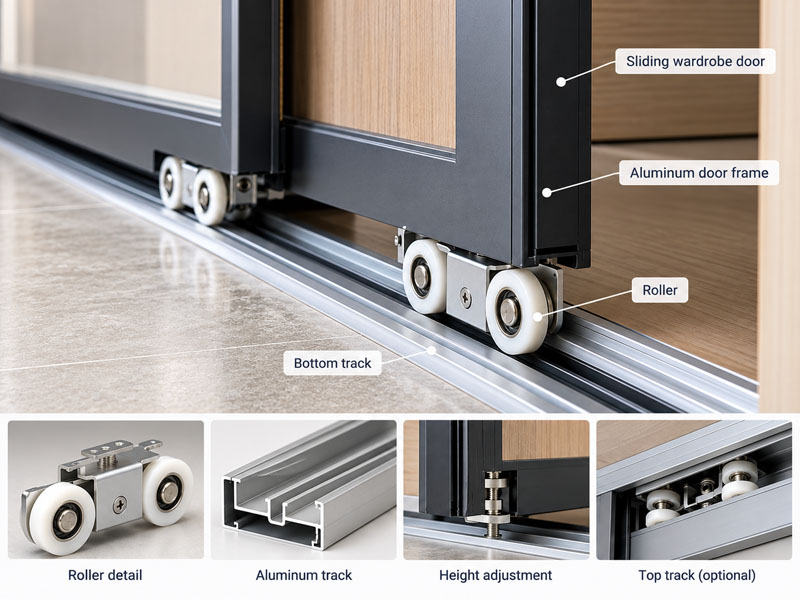
The frame cannot be selected independently from the sliding hardware.Tracks and rollers play an important role in how the door moves and how its weight is supported.
Even a strong aluminum frame may not work properly if the hardware is unsuitable.
Before finalizing the frame dimensions, check the following details:
Track width: The frame and rollers must fit the selected track system.
Roller capacity: The rollers must support the complete door weight.
Door clearance: Enough space is needed for smooth sliding movement.
Frame connections: Corner joints must remain secure during use.
Soft-closing hardware: The frame must accommodate the required components if a soft-close system is used.
For furniture manufacturers using an existing sliding system, it is often easier to select a compatible frame before making changes to the hardware.
This helps avoid problems during assembly and installation.
Common Mistakes When Choosing Sliding Wardrobe Door Frame Sizes
Some frame selection problems only become obvious after the door has been assembled.
The following mistakes are worth avoiding.
Choosing a frame based only on appearance
A very slim frame may look attractive, but its structure still needs to support the door.
Ignoring the panel thickness
If the frame groove does not match the panel, installation may require additional parts or a different profile.
Overlooking the total door weight
Glass, mirrors and thick wood-based panels can add significant weight. The frame and rollers must be selected accordingly.
Assuming thicker aluminum is always stronger
Wall thickness matters, but the profile shape and internal structure also affect stiffness.
Selecting the frame before checking the hardware
An incompatible track or roller system can create installation problems, even when the frame dimensions appear suitable.
Checking these details early can reduce modifications and improve the performance of the finished wardrobe door.
FAQs About Sliding Wardrobe Door Frame Sizes
What is the standard frame size for a sliding wardrobe door?There is no universal standard frame size. Different wardrobe systems use different frame widths, depths and panel grooves. Slim designs may use visible widths around 18–20 mm, while other systems use wider frames.
Is a 20 mm aluminum frame suitable for a sliding wardrobe door?
A 20 mm visible frame width may be suitable for some sliding wardrobe doors. However, its performance depends on the profile structure, door dimensions, panel weight and hardware.
How thick should an aluminum wardrobe door frame be?
Some wardrobe frame designs use aluminum wall thicknesses around 1.0–1.5 mm, but the required thickness varies. Larger or heavier doors may need a different profile design or additional reinforcement.
Can a slim aluminum frame support a glass wardrobe door?
Yes, if the complete frame system is designed for the glass weight and dimensions. The glass fixing method, frame joints and roller capacity must also be suitable.
What should I check before ordering a wardrobe door frame?
Start with the door height and width, panel material, panel thickness and estimated total weight. Then check the frame groove, cross-section and compatibility with the sliding hardware.
The best frame size for a sliding wardrobe door depends on more than its visible width.
Slim frames can create a modern appearance, while wider or reinforced designs may be useful for certain larger doors.
However, door dimensions, panel thickness, weight and hardware compatibility are more important than choosing a particular width alone.
For wardrobe manufacturers and furniture suppliers, checking these details before production can help avoid fitting problems and improve the stability of the finished door.
If your wardrobe design requires a specific frame shape or panel groove, Shenghai Aluminum can assist with custom aluminum extrusion based on your drawings and dimensional requirements.